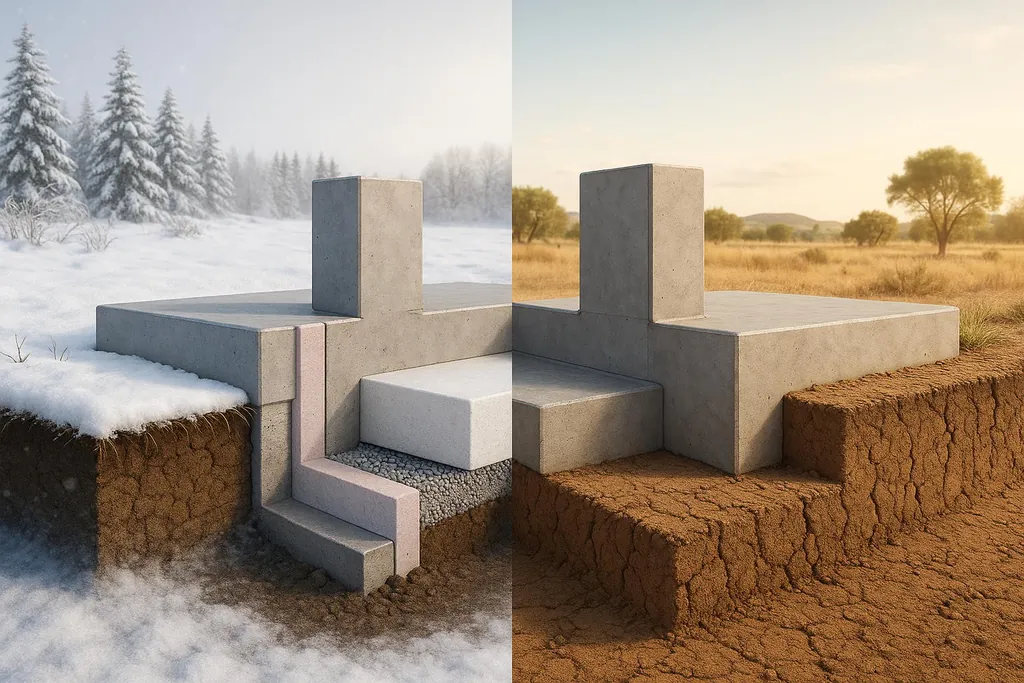
Explore how frost-protected shallow foundations differ in cold and warm climates, focusing on insulation, drainage, and energy efficiency.
Cold vs. Warm Climates: Frost-Protected Foundations
Use the Slab-on-Grade Insulation Calculator to see how a frost-protected shallow foundation compares to vertical edge insulation on annual heating cost and payback in your climate.
Frost-Protected Shallow Foundations (FPSFs) are designed to prevent foundation damage caused by freezing soil in cold climates while improving energy efficiency in warm climates. Instead of digging deep, FPSFs use rigid foam insulation to regulate soil temperature and manage moisture. Here's what you need to know:
- Cold Climates: FPSFs combat frost heave by using thicker insulation and robust drainage systems. Key materials include extruded polystyrene (XPS) or high-density expanded polystyrene (EPS). Proper soil management and drainage are critical to avoid freeze–thaw-related issues.
- Warm Climates: FPSFs focus on reducing heat transfer and controlling moisture. Insulation requirements are minimal, and proper grading and vapor barriers are essential to maintain foundation stability.
Key Differences:
- Cold climates need thicker insulation and deeper foundations to handle frost risks.
- Warm climates prioritize moisture management and energy performance with simpler designs.
Quick Tip: Whether you're in Minnesota or Arizona, proper drainage and insulation placement are non-negotiable for a durable FPSF. For DIY builders, assessing soil type, frost depth, and water conditions is critical to success.
Frost Protected Slab Explained | Insulation, Vapor Barrier & More
Foundation Design for Cold Climates
When designing frost-protected shallow foundations (FPSFs) for cold climates, it’s crucial to take local frost conditions into account and carefully plan insulation placement to guard against frost heave.
The starting point for any FPSF design is determining the frost depth in your area. This information, typically available from local building departments or trusted climate data sources, serves as the foundation for crafting an effective insulation strategy. Once you have this data, you can move on to detailed insulation techniques.
Insulation Methods for Frost Protection
Vertical insulation plays a central role in FPSF design. Rigid foam insulation is usually installed along the exterior wall, extending from the top of the foundation down to the footing, creating a continuous thermal barrier. Horizontal insulation complements this by extending outward from the foundation, protecting the footing area from freezing temperatures. In regions with severe frost risks, additional insulation around corners may be recommended to address these vulnerable areas.
The choice of insulation material matters. Extruded polystyrene (XPS) is a popular option due to its excellent moisture resistance and durability in ground contact. High-density expanded polystyrene (EPS) can also work well, provided there’s a solid moisture management plan in place.
Soil and Drainage Requirements
Managing drainage effectively is critical in cold climates, where freeze–thaw cycles can lead to water movement and potential frost heave. Preventing water accumulation around the foundation is key to maintaining stability.
Using granular backfill around the insulation is a common approach. It enhances drainage while supporting the thermal system. The type of soil is another factor to consider. Clay soils, for example, retain moisture and expand when frozen, often requiring removal or replacement with more stable materials. Sandy soils, on the other hand, typically need minimal adjustments, while rocky soils may require extra excavation to ensure proper insulation placement.
Perimeter drainage systems - such as drainage tiles or pipes installed near the footing level - are also effective for managing both groundwater and surface water. These systems help minimize the risk of moisture-related damage, ensuring the foundation remains stable. Local building codes often provide additional guidance on these practices.
Building Code Requirements
The International Residential Code offers a baseline for constructing FPSFs in cold climates, but local building codes often include additional requirements tailored to regional conditions. These regulations specify insulation placement, thermal resistance standards, and other construction details needed to create an effective thermal barrier.
Inspections ensure that insulation, drainage, and backfill are installed correctly. In areas with deeper frost penetration or challenging soil conditions, local authorities might require extra measures, such as thermal imaging, to confirm the integrity of the thermal envelope.
Ultimately, following local building codes and guidelines is essential for creating a durable FPSF design that can withstand the demands of cold climates.
Foundation Design for Warm Climates
In warm regions, foundation design takes a different approach compared to colder areas. While cold climates focus heavily on insulation to combat frost heave, warm climate designs prioritize energy efficiency, maintaining thermal comfort, and managing moisture. Since frost heave isn’t a concern, the emphasis shifts to controlling heat transfer and preventing moisture issues, which are key to long-lasting foundations.
For these climates, designers often use thinner insulation to reduce heat transfer between the building and the naturally moderate temperatures of deeper soil. At the same time, proper site grading and drainage systems are essential to avoid moisture accumulation, which could compromise the foundation’s integrity.
Most guidelines for frost-protected shallow foundations (FPSFs) are tailored to cold climates, leaving fewer resources for warm regions. This means builders must carefully evaluate the site’s conditions and consult local building codes to choose the right insulation and moisture management techniques.
Cold vs. Warm Climate FPSF Differences
When it comes to frost-protected shallow foundations (FPSFs), the differences between cold and warm climates are more than just temperature-related - they influence everything from materials to construction methods. Knowing these distinctions is essential for builders to make choices that align with their site conditions and budget.
In colder climates, FPSFs require thicker and deeper insulation to combat frost and prevent ground movement caused by freezing. On the other hand, warm climate designs can use minimal insulation since frost isn’t a concern. Moisture management also varies: cold climates focus on preventing frost heave, while warm climates prioritize vapor barriers and effective drainage systems. These differences directly affect energy efficiency and the complexity of installation, with colder regions often requiring more detailed and challenging construction practices.
Side-by-Side Comparison
| Factor | Cold Climate FPSF | Warm Climate FPSF |
|---|---|---|
| Insulation | Thicker insulation to protect against freezing | Minimal insulation |
| Foundation Depth | Deeper to reach stable, unfrozen soil | Shallower since frost isn’t an issue |
| Primary Focus | Preventing frost heave with thermal protection | Managing moisture and heat mitigation |
| Material Costs | Higher due to more insulation and excavation | Lower with reduced material needs |
| Construction Complexity | More intricate, requiring precise insulation placement | Simpler with straightforward designs |
| Moisture Management | Combines drainage with frost prevention | Focuses on vapor barriers and drainage |
| Energy Efficiency Impact | Reduces heating costs in winter | Boosts cooling efficiency in warm months |
| Code Compliance | Must meet frost-line and insulation standards | Follows thermal and moisture guidelines |
These differences don’t just affect construction - they also shape long-term performance and energy savings. In cold regions, the emphasis on thermal protection can significantly cut heating costs during winter. Meanwhile, FPSFs in warm climates help maintain consistent energy efficiency throughout the year.
Grasping these contrasts is key to evaluating site conditions and ensuring foundation durability. The next section will dive into practical tips for DIY builders to get the most out of their FPSF projects.
DIY Builder Tips and Advice
Taking on a DIY FPSF (Frost-Protected Shallow Foundation) project can save you a good chunk of money - provided you assess your site carefully and stick to proven methods.
Site Assessment and Preparation
Start by checking your area's frost line depth through county resources. Dig a few 4-foot test pits to identify your soil type. If you’re dealing with clay, remember it retains moisture and will need better drainage. Sandy soils, on the other hand, drain well but might require stabilization. Hit bedrock within two feet? You’ll need to tweak your foundation plans accordingly.
For insulation, rigid foam XPS is your best bet. Colder areas call for R-10 to R-15 insulation around the foundation perimeter, while warmer climates can get by with R-5 or less. Grade your site with a 2% slope over 10 feet to keep water flowing away from the foundation. In areas with clay or high water tables, installing French drains is essential.
Once your site is prepped, be ready to tackle any challenges unique to your terrain and water conditions.
Common Problems and Solutions
If you’re dealing with rocky terrain, consider foundation designs that follow the land’s natural shape. Builders in areas with common granite ledges often adjust their methods to avoid the hefty cost of blasting.
High water tables? You’ll need a robust drainage system. Install perimeter drains at footing level, directing water to daylight or a sump system. Use gravel backfill around the foundation walls to improve drainage.
Make sure your insulation is continuous - extending under the slab and down the foundation walls without gaps. Use construction adhesive or mechanical fasteners to secure foam boards, and seal all joints with compatible tape to prevent thermal bridges.
Before pouring concrete, install and test your drainage systems. Use a garden hose to confirm proper slope - aim for about 1/4 inch per foot toward the outlet.
[DIY Eco Homes](/) Resources

DIY Eco Homes is a treasure trove for owner-builders working on frost-protected foundations in any climate. They provide detailed cost breakdowns, helping you budget for materials and tools while accounting for regional price differences.
Their step-by-step guides cover every phase of FPSF installation, from site assessment to final backfilling. You’ll find material recommendations aligned with energy-efficient and sustainable building practices.
Video tutorials dive into practical techniques, like placing insulation correctly to avoid thermal bridges and ensuring continuous protection around your foundation. They also break down complex topics like vapor barrier setup and connecting drainage systems.
Looking for eco-friendly options? DIY Eco Homes has you covered with advice on reclaimed foam insulation, natural drainage materials, and low-impact concrete. Plus, their community features let you connect with other DIY builders to swap tips and cost-saving strategies.
Check out diyecohomes.com for resources that will help you stay on budget, build sustainably, and ensure your FPSF project performs well for years to come.
Conclusion
Building a frost-protected shallow foundation that suits your local climate is key to ensuring its durability and efficiency. In colder regions, this means using strong insulation and designing a solid drainage system to handle freeze-thaw cycles. In warmer areas, while less insulation is needed, controlling moisture remains essential to avoid foundation problems.
Your local soil type and the water table also play a big role in shaping the design. If you're tackling this as a DIY project, it’s crucial to evaluate your site carefully and stick to well-established methods that align with your specific conditions.
No matter the climate, good drainage is non-negotiable. It prevents frost heave and keeps moisture at bay, safeguarding your foundation. By customizing your foundation to fit your environment, you can reduce initial costs and avoid expensive repairs down the line. Plus, proper insulation and drainage don’t just protect your foundation - they also help lower energy use in the long run.
Whether you're building in the icy winters of Minnesota or the dry heat of Arizona, tailoring your foundation to local needs ensures better performance and long-term savings. For more detailed tips and cost insights, check out the resources at DIY Eco Homes.
FAQs
How can I determine the right insulation thickness for a frost-protected shallow foundation in a cold climate?
In colder regions, the thickness of insulation for frost-protected shallow foundations is influenced by factors like your local climate zone, frost depth, and soil moisture levels. Commonly, rigid polystyrene foam insulation with an R-value ranging from R-10 to R-20 is used. Corners and edges, where heat loss tends to be higher, often require insulation with higher R-values.
This type of insulation helps minimize frost penetration, which can allow footings to be installed as shallow as 16 inches in certain cases. To ensure compliance and effectiveness, always refer to your local building codes and climate-specific guidelines. Proper installation is crucial for maintaining energy efficiency and the foundation's structural integrity.
How can I ensure proper drainage when building a frost-protected shallow foundation in a warm climate?
Proper drainage is key when working with a frost-protected shallow foundation in a warm climate. Start by grading the soil around the foundation so it slopes away from the structure. This simple step directs surface water away, preventing it from pooling near the foundation.
Adding drainage layers, like gravel or crushed stone, is another important measure. These materials should be installed correctly and connected to a daylighted outlet, ensuring water can flow freely and doesn’t collect around the insulation.
By keeping the foundation dry and ensuring effective insulation, you not only minimize moisture-related issues but also help maintain the structure's stability over time.
Can frost-protected shallow foundations be used on challenging soil types like clay or rocky ground, and what should DIY builders consider when working with these conditions?
Yes, frost-protected shallow foundations (FPSFs) can work on tricky soil types like clay or rocky ground, but they demand a bit more preparation and fine-tuning. The first step is to evaluate the soil's drainage, stability, and insulation requirements before diving into construction. For instance, clay soils often hold onto water, so you might need to install extra drainage systems to keep things dry. On the other hand, rocky terrains could call for additional excavation or leveling to create a solid, even base.
If you're tackling this as a DIY project, start with a soil analysis and make sure to check your local building codes to stay compliant. Choosing the right [insulation materials](/blog/natural-vs-synthetic-insulation-cost-and-efficiency-comparison) and methods for your specific soil conditions is crucial to keep the foundation performing well thermally. Not sure where to start? Platforms like DIY Eco Homes provide helpful guides and tips to make navigating these challenges a bit easier.