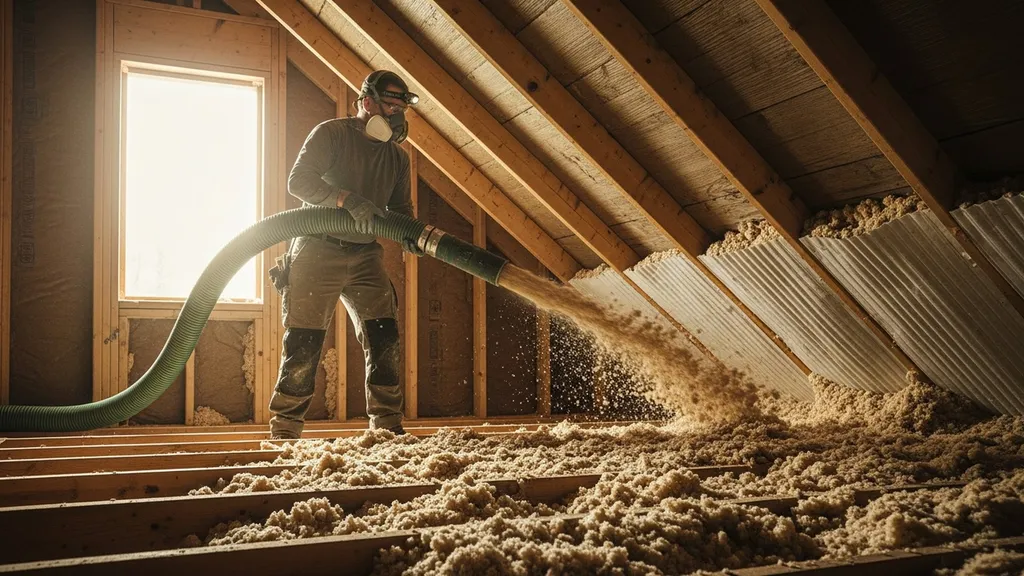
Compare attic insulation materials, typical R-values, and DIY-friendly installation tips to pick the best option for your climate, budget, and attic type.
Best Insulation for Attic: Materials and R-Values
Proper attic insulation makes a big difference to winter heat retention and summer cooling loads. This guide on the best insulation for attic walks through common materials, typical R-values per inch, practical DIY methods, and which choices fit particular climates and attic types. Read on to learn the R-value targets you should aim for, how installed performance differs from rated performance, and concrete steps to upgrade an attic without overspending.
TL;DR:
- Aim for attic R-values of roughly R-49–R-60 in cold zones, R-38–R-49 in mixed zones, and R-30–R-38 in warm zones (DOE guidance).
- For retrofits, dense-pack cellulose or blown fiberglass give the best DIY value; for roofline or airtight assemblies, use polyiso or spray foam for combined insulation and air sealing.
- Always air-seal first (top plates, penetrations, recessed lights); added insulation loses value if air leakage and moisture risks aren’t addressed.
Why Attic Insulation Matters for Energy, Comfort and Durability
Attics are often the largest uninsulated surface of a house and a major source of heat loss and heat gain. Heat moves by conduction through materials, but air leakage and convective flow are often responsible for most energy loss in attics. In winter, warm indoor air leaking into a cold attic carries heat and moisture; in summer, overheated attic air drives higher cooling loads.
The Department of Energy recommends attic insulation levels that vary by climate; typical targets range from about R-30 to R-60 depending on climate zone and local code (DOE: Where to insulate in a home). Proper attic insulation and air sealing can reduce heating and cooling energy use by roughly 10–25% in typical houses, though exact savings depend on existing insulation, HVAC efficiency, and climate.
R-value is a material’s resistance to conductive heat flow. Higher R means better resistance per thickness. That said, R-value does not measure the effect of air leakage or moisture control. An attic with high R-value insulation but poor air sealing or blocked ventilation can underperform, develop condensation, and even damage roof sheathing. Passive-house principles emphasize both high R and airtightness; for more on whole-envelope performance see our guide to passive house insulation principles. Upgrading insulation often gives better return than window replacement; read more on when to invest in window upgrades and insulation.
Quick Guide: Best Insulation for Attic at a Glance
- Dense-pack cellulose: Best retrofit balance of performance, cost, and sustainability for most attics — R/inch ~3.2–3.8, resists air movement when installed correctly.
- Fiberglass batts/loose-fill: Lowest material cost and widely available — R/inch ~2.9–3.8; only good if fitted without gaps and not compressed. See our fiberglass batt specs.
- Mineral wool (rockwool): Good fire resistance and moisture tolerance — R/inch ~3.0–3.3; better handling and itch profile than fiberglass. Compare to fiberglass in rockwool vs fiberglass.
- Closed-cell spray foam: Highest R/inch (~6–7) and acts as an air barrier — best where full air-seal of the roofline is required; higher embodied carbon and cost.
- Polyiso rigid board: High R/inch (~5.6–6.5) for roofline continuous insulation; watch for lower winter performance in very cold climates—see polyiso pros and cons.
- Quick R targets by climate: Cold (R-49–R-60), Mixed (R-38–R-49), Warm (R-30–R-38) per DOE guidance.
This quick summary highlights the best attic insulation materials by priority: cost, thermal performance, and sustainability. For scenario-specific guidance, skip to the comparison table later in this article.
Common Attic Insulation Materials: Properties, R-values, Pros & Cons
Fiberglass (batts and Loose-fill)
- R-value per inch: ~2.9–3.8
- Uses: Attic floor batt installs, blown loose-fill for retrofit attic floors
- Pros: Low cost, easy DIY, non-combustible binder
- Cons: Performance falls if compressed or poorly fit; sensitive to air movement
- DIY friendliness: High for batts and loose-fill (with blower rental)
- See product specs: fiberglass batt specs and DOE/Insulation Institute installation guidance (Insulation Institute attic instructions).
Cellulose (loose-fill and Dense-pack)
- R-value per inch: ~3.2–3.8
- Uses: Retrofit attic floors, cavity dense-pack in rafter bays
- Pros: High recycled content, good at reducing convective loops, affordable
- Cons: Can settle if not dense-packed, must control moisture pathways
- DIY friendliness: Moderate — blower rental for loose-fill; dense-pack usually done by trained installers. See our tool guide for dense installs: dense-pack cellulose guide.
Mineral Wool (rockwool) Batts
- R-value per inch: ~3.0–3.3
- Uses: Attic floors, cathedral ceilings, roofline assemblies
- Pros: Fire resistant, vapor-tolerant, comfortable to handle
- Cons: Slightly higher cost than fiberglass
- DIY friendliness: High for batts; see detailed guidance: mineral wool batt guide.
Spray Polyurethane Foam (open-cell and Closed-cell)
- R-value per inch: open-cell ~3.5–3.7; closed-cell ~6–7
- Uses: Air sealing and insulation for roofline, rim joist, complex geometry
- Pros: Excellent air sealing; closed-cell adds structural rigidity and moisture resistance
- Cons: High cost, higher embodied carbon, requires PPE and professionals for safe application
- DIY friendliness: Low for high-quality, consistent results; compare air-seal vs embodied impact in our spray foam vs cellulose guide.
Rigid Foam Boards (polyiso, XPS, EPS)
- R-value per inch: polyiso ~5.6–6.5 (face dependent); XPS ~5; EPS ~3.6–4.0
- Uses: Continuous roofline insulation, insulating sheathing, retrofit over rafters
- Pros: High continuous-insulation value, avoids thermal bridging when applied continuous
- Cons: Edges must be sealed; some types have higher embodied carbon; polyiso performance can drop in extreme cold — see polyiso in cold climates.
- DIY friendliness: Medium — cutting and sealing boards is straightforward, but detailing around penetrations matters.
Natural and Recycled Options (cork, Denim/cotton)
- R-value per inch: cork ~3–4; recycled denim ~3.0–3.7
- Uses: Eco-focused builds, small retrofit projects, sound control
- Pros: Low embodied carbon and few VOCs for some products
- Cons: Higher cost and sometimes limited availability; check product fire ratings — read more on cork in using cork insulation and recycled denim at cotton batt option.
Before choosing, consider health and indoor air quality. The EPA provides guidance on indoor air quality and materials selection: see the EPA's indoor air quality resources. Also review the Insulation Institute's DIY attic installation instructions for safe approaches (Insulation Institute attic instructions).
A short video comparison can help visualize thicknesses and installation trade-offs — viewers can learn how materials look installed and compare R-values visually below.
This video provides a helpful walkthrough of the key concepts:
R-values for Attics: Per-inch Numbers and Recommended Totals
Below is a compact comparison table showing typical R/inch, typical installed thickness for attics, and resulting installed R-value for common materials.
| Material | R/inch (approx.) | Typical attic thickness | Typical installed R |
|---|---|---|---|
| Fiberglass batts/loose-fill | 2.9–3.8 | 8–16 in | R-23–R-38 |
| Cellulose loose-fill/dense-pack | 3.2–3.8 | 8–16 in | R-26–R-60 |
| Mineral wool batts | 3.0–3.3 | 8–12 in | R-24–R-40 |
| Open-cell spray foam | 3.5–3.7 | 4–8 in | R-14–R-30 |
| Closed-cell spray foam | 6.0–7.0 | 2–4 in | R-12–R-28 |
| Polyiso rigid board | 5.6–6.5 | 1–4 in (layered) | R-6–R-26 |
Recommended total attic R-values vary by climate. The DOE provides climate-zone-based guidance; a simple summary:
- Cold climates (Zones 5–8): R-49–R-60
- Mixed climates (Zones 3–4): R-38–R-49
- Warm climates (Zones 1–2): R-30–R-38
Check local code and ENERGY STAR recommendations for exact targets; a national overview is available in the DOE's Where to Insulate guide and the ENERGY STAR attic insulation project page.
Why installed R differs from rated R:
- Compression reduces R per inch; stuffing batts into shallower cavities lowers performance.
- Gaps, voids, and misalignment at joists create thermal bypass.
- Settling affects loose-fill cellulose or fiberglass over time if not installed to recommended densities.
- Thermal bridging through rafters or ceiling joists reduces effective assembly R-value.
- Air movement through insulation can drastically reduce effective insulation unless air-sealed.
Measure depth with marked depth sticks and follow manufacturer install density to achieve rated R. For loose-fill cellulose, installers target specific pounds per cubic foot; see our dense-pack tool: dense-pack cellulose guide.
How to Choose the Best Insulation for Your Attic: Climate, Budget, and Attic Type
Choosing comes down to three main variables: climate, attic type, and budget.
Vented vs Unvented Attic
- If your attic is vented (soffit and ridge vents), insulate the attic floor and maintain ventilation path with baffles. Blown-in cellulose or fiberglass loose-fill is common here.
- If unvented (conditioned attic / roofline insulated), you need a continuous air barrier and either spray foam or rigid foam over the roof sheathing. For new builds or converting attics, consider polyiso or closed-cell spray foam to keep HVAC equipment and ducts within the conditioned space. See our post on roof insulation methods for roofline details.
Attic Floor vs Roofline Insulation
- Attic floor insulation is typical for vented attics and is generally easier and cheaper to add.
- Insulating at the rafters (roofline) is necessary when you want a conditioned attic, when mechanicals live in the attic, or when creating vaulted or cathedral ceilings. Polyiso boards, continuous foam plus a thermal break, or spray foam are common choices.
Budget, Lifespan, and Resale
- Upfront cost tiers (relative): low—fiberglass; medium—cellulose, mineral wool; high—spray foam and high-performance polyiso assemblies.
- Lifespan: most insulation types last decades if kept dry and undisturbed; cellulose and fiberglass are susceptible to moisture and settling if exposed.
- Resale: Buyers value a dry, well-insulated roof assembly and documented air sealing. Dense-pack cellulose and mineral wool score well for durability and eco-conscious buyers.
Cold climates should prioritize high total R and careful moisture control. In hot-humid climates, a vapor-open strategy with good ventilation and a continuous exterior layer prevents moisture traps; cellulose or mineral wool with proper ventilation often works well. For guidance on polyiso performance in cold weather, read polyiso in cold climates.
DIY Installation Methods and Step-by-step Tips for Attic Insulation
Preparing the Attic: Air Sealing, Ventilation, and Safety
- Wear appropriate PPE: NIOSH-rated respirator for dust, gloves, and eye protection; long sleeves for fiberglass and mineral wool.
- Air-seal first: use canned spray foam or caulk on top plates, around chimneys, plumbing stacks, and wiring penetrations. Follow the DOE's air-sealing guidance: see air sealing your home.
- Check ventilation: install eave baffles to keep soffit vents clear and ensure balanced intake/exhaust ventilation for vented attics.
- Safety: ensure recessed lighting is IC-rated before covering; maintain required clearances to chimneys and flues.
Installing Batts and Loose-fill Insulation (DIY Workflow)
- Install in layers for higher R-values; do not compress batts.
- Use friction-fit or secure with wires/strapping; cut around obstacles cleanly.
- For loose-fill, rent a blower from a home center and follow the manufacturer’s depth guide; mark joists with depth markers to reach target R.
- Protect recessed fixtures: use covers for non-IC lights or replace with IC-rated LED fixtures.
Dense-pack Cellulose and Blow-in Best Practices
- Dense-pack reduces settling and air movement; requires blower and often a hole drilled through the ceiling or side from the soffit for cavity fills.
- Hire or consult a specialist if you’re dense-packing stud bays or rafter cavities; improper density leads to settling or over-compression.
- For guidance and step-checklists see our dense-pack cellulose guide.
When to Hire Pros: Spray Foam and Complex Roofline Jobs
- Spray foam requires trained installers and proper ventilation during application. Mistakes can cause off-ratio foam, odors, or fire-stop problems.
- Complex roofline insulation, air barrier continuity, and situations with roof-mounted HVAC equipment are good reasons to hire a contractor.
- Use blower-door testing and thermal imaging to verify results if you invested in an airtight upgrade.
Also consider advanced framing techniques to reduce thermal bridging; see our advanced framing tips. For moisture control and sealing practices that overlap with crawlspaces, see crawl space sealing tips.
Costs, Embodied Carbon and Environmental Considerations
Installed costs vary widely by region and job complexity; use these relative categories:
- Low: Fiberglass batts or loose-fill — material cheap, labor modest.
- Medium: Cellulose dense-pack, mineral wool — higher labor or equipment.
- High: Spray foam (especially closed-cell), multi-layer polyiso roofline systems.
Simple payback depends on energy prices and the home's starting point. A modest retrofit (adding R-30 to an R-11 attic) might pay back in 5–12 years in colder regions; exact savings vary considerably.
Embodied carbon:
- Cellulose (high recycled content) and recycled denim typically have lower embodied carbon than petrochemical-based foams.
- Closed-cell spray foam and some XPS boards have higher lifecycle emissions due to blowing agents and petrochemical feedstocks.
- For lower-toxicity foam alternatives and lifecycle trade-offs, see our article on safer spray foam options and consider recycled-material strategies like those in our recycled aggregate concrete guide for a broader lifecycle perspective.
Indoor air quality and health:
- Ensure insulation materials are dry at installation to avoid mold risks.
- Some spray foams and adhesives can emit VOCs during curing; follow manufacturers' ventilation and re-occupancy times.
- The EPA has guidance on indoor air quality and material selection: EPA indoor air quality resources. For worker safety, consult OSHA/NIOSH recommendations on handling insulation materials.
Dispose and recycle:
- Some rigid foam offcuts may be recyclable through construction waste programs; cellulose and mineral wool typically go to general waste unless a local recycler accepts them.
Comparison: Best Insulation for Attic by Scenario (quick Decision Table)
Scenarios and Recommendations
- Cold climate retrofit → Dense-pack cellulose or layered rigid foam + batt; target R-49–R-60; method: dense-pack attic floor or continuous exterior CI if re-roofing.
- Hot-humid retrofit → Cellulose or mineral wool on attic floor with preserved ventilation; target R-30–R-38; method: blown-in with clear baffles at eaves.
- New build roofline → Polyiso continuous boards or closed-cell spray foam if structural air seal is needed; target per code and assembly specifics; method: continuous exterior insulation + ventilated cover where required.
- Tight budget DIY → Fiberglass batts if installed carefully, reaching recommended depth and avoiding compression; method: layered batts or loose-fill top-up.
| Scenario | Recommended material | R target | Installation method |
|---|---|---|---|
| Cold climate retrofit | Dense-pack cellulose | R-49–R-60 | Dense-pack attic floor or layered batt+CI |
| Hot-humid retrofit | Cellulose or mineral wool | R-30–R-38 | Blown-in, with baffles and ventilation |
| New build roofline | Polyiso or closed-cell foam | Depends on assembly | Continuous boards or spray foam at rafters |
| Budget DIY | Fiberglass batts/loose-fill | Meet code R | Careful fitting, depth markers, air sealing |
Case example — cold-climate retrofit:
- Existing: R-11 fiberglass between joists.
- Target: R-60.
- Recommended: Dense-pack cellulose added to depth for R-49, plus top-up with fiberglass batts or foam board where joists limit depth. Air-seal top plates before insulating.
Case example — tight budget:
- Install R-19 batts between joists, then add loose-fill to reach R-38, ensuring baffles and no compression. Seal gaps around vents and top plates to protect value of added insulation.
The Bottom Line
- Match material to attic type and climate: dense-pack cellulose or mineral wool performs well for most retrofits, while polyiso or closed-cell foam suits roofline/conditioned attic assemblies.
- Prioritize robust air sealing and proper ventilation before adding thickness — installed R-value underperforms when air leakage persists.
- Choose materials balancing upfront cost, embodied carbon, and long-term performance; hire professionals for spray foam or complex roofline work.
Frequently Asked Questions
What R-value do I need in my attic?
Recommended attic R-values vary by climate. As a simple guide, aim for R-49–R-60 in cold climates, R-38–R-49 in mixed climates, and R-30–R-38 in warm climates. The U.S. Department of Energy provides climate-zone maps and specific targets in its "Where to Insulate" guidance: see the DOE guide.
Can I install insulation over existing insulation?
Yes, in many cases you can add loose-fill or another layer of batt over existing insulation. First, check for moisture, pest damage, or mold; remove wet or contaminated material. Maintain ventilation paths (soffit baffles) and avoid compressing underlying batts. If the existing material is a vapor-trapping layer in a problematic assembly, consult a builder or building scientist before adding more.
Is spray foam better than cellulose for attics?
Spray foam offers higher R-per-inch and acts as an air barrier, which is advantageous for unvented or conditioned attics and complex rooflines. Cellulose has lower embodied carbon, resists convective heat transfer well when dense-packed, and is more affordable for large attic floors. The best choice depends on whether air sealing or sustainability is the priority; compare trade-offs in our spray foam vs cellulose article.
How do I prevent moisture in my attic after insulating?
Start with an air-seal of ceilings and top plates to stop warm, moist indoor air from entering the attic. Preserve or provide proper ventilation for vented attics using soffit baffles and ridge or gable vents. Avoid creating a vapor-impermeable sandwich that traps moisture—this is especially important in cold climates. The EPA's indoor air quality resources offer helpful background on moisture and occupant health: EPA indoor air quality resources.
Can I DIY dense-pack cellulose?
Some experienced DIYers can dense-pack cellulose using rented blowers and following manufacturer density guidelines, but dense-pack in cavities often requires skill and inspection to avoid settling or overfilling. For wall cavities, rafter bays, or assemblies that affect roofline performance, hiring a contractor with dense-pack experience is recommended. For a DIY-friendly dense-pack workflow, see our dense-pack cellulose guide.