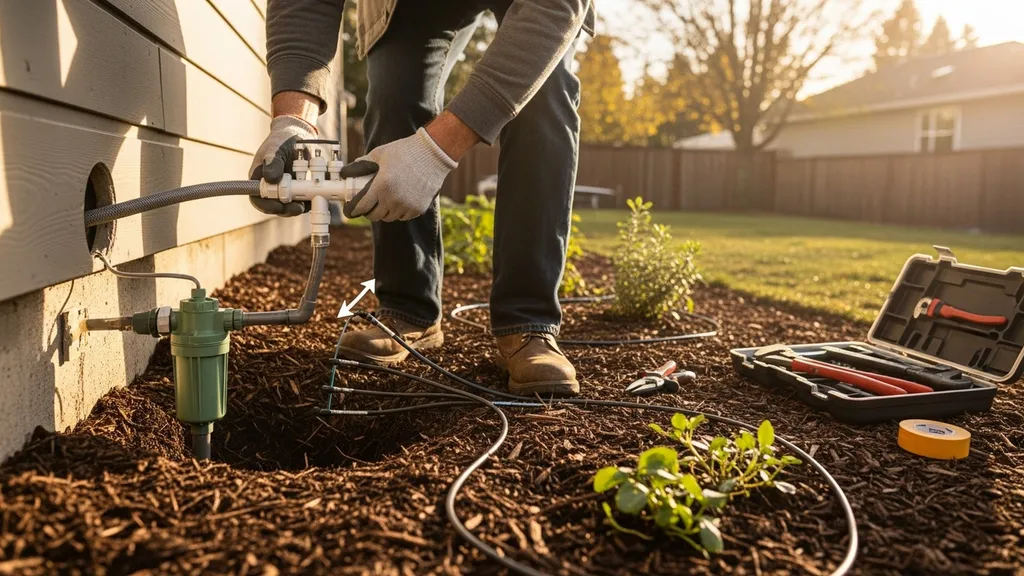
Practical DIY guide to greywater systems — types, planning, installation, maintenance, costs, and permits for sustainable home reuse.
Greywater Systems: Reuse and Recycling Guide
A greywater system captures wastewater from showers, bathtubs, bathroom sinks, and laundry and reroutes it for beneficial reuse—most commonly garden irrigation. Installing a greywater system can cut household freshwater demand by roughly 30–50% depending on behavior and system design, while lowering the load sent to sewers. This article explains what counts as greywater, how common systems work, permit and health considerations, step-by-step planning and installation guidance for DIYers, and long-term maintenance so a greywater system performs safely and reliably.
TL;DR:
- Install a laundry-to-landscape greywater system to reuse about one-third of household wastewater with low cost and simple maintenance.
- Choose branched-drain or pumped storage for seasonal buffering or when precise distribution is needed; check local permits before building.
- Follow a routine maintenance schedule (monthly filter checks, annual inspections) and use low-salt, biodegradable detergents to avoid soil buildup.
What is a Greywater System? Key Definitions and Everyday Sources
A greywater system collects wastewater from non-toilet sources for onsite reuse. Unlike blackwater (toilet waste), greywater typically contains lower pathogen loads but still carries oils, detergents, hair, lint, and food particles. Common household greywater sources are:
- Shower and bathtub drains
- Bathroom sink drains
- Laundry machine drains (frequently used in laundry-to-landscape systems)
- Kitchen sinks are sometimes excluded because of grease and food solids; when included, they usually require additional treatment
Research and public guidance estimate that 50–80% of residential wastewater qualifies as greywater when toilets are excluded; practical reuse typically captures 30–50% of household flows depending on fixtures and behavior. For design steps and broader planning considerations for onsite wastewater, see the USDA's planning guide for on-site greywater disposal systems (PDF): Planning guide for on-site greywater disposal systems.
Key terms to know:
- Branched-drain system: Diverts specific drain lines to irrigation using a valve.
- Laundry-to-landscape: Simple setup routing washing machine effluent directly to mulch basins.
- Mulch basin: A shallow basin filled with mulch and soil where greywater is applied and infiltrates.
- Constructed wetland: A treatment area using plants and soil to improve water quality before reuse.
This section provided definitions and example sources; later sections explain design options, treatment needs, and permitted uses in detail.
Key Points at a Glance for Greywater Systems
Top Benefits and Trade-offs
- Water savings: Reusing shower and laundry water can reduce potable water use by about 30–50% for many households.
- Hardware cost: Simple laundry-to-landscape systems are low-cost; pumped and treated systems have higher upfront costs and maintenance.
- Plant suitability: Best used on ornamental plants, trees, and lawns; many codes limit use on root crops and edible plants eaten raw.
- Health risk: Pathogen risk is lower than blackwater but not zero; avoid surface contact and direct edible crop irrigation unless treated and allowed by code.
- Maintenance: Filters and distribution lines require periodic cleaning; pumps and floats have finite lifespans (typically 3–10 years).
- Permitting: Many jurisdictions require permits for permanent or complex systems. Simple, temporary laundry-to-landscape setups may have fewer restrictions but still must meet setback rules.
- Off-grid compatibility: Systems that do not rely on grid power (gravity-fed branched drains or storage with manual diversion) are well suited to off-grid homes; pumped systems need power or solar-powered controllers.
- Detergent impacts: Use low-sodium, biodegradable detergents to reduce soil salt build-up and plant stress.
When to Choose DIY vs Professional Help
- DIY is reasonable for laundry-to-landscape and simple branched-drain diverters if local code allows and the installer is comfortable with plumbing basics.
- Hire a licensed plumber or installer for systems requiring storage tanks, electrical pump connections, complex permit applications, or when the project ties into municipal sewer lines.
- For any system that affects home sanitation or is near wells/basements, consult a professional and the local health department.
For passive-house or resource-efficient builds, greywater strategies can complement other measures; see passive house considerations in our related article on passive house considerations.
Common Greywater System Designs and Components
Most greywater systems share several components: a diversion valve, a coarse filter (lint/trash), a sediment trap or settling chamber, distribution lines, and delivery points such as drip tubing or mulch basins. Design choices depend on flow source, site topography, and reuse goals.
Laundry-to-landscape (simple, Low-cost)
Laundry-to-landscape systems route washing machine discharge through a lint filter into mulch basins or drip tubing. Pros: low cost, minimal plumbing, effective for established shrubs and trees. Cons: limited control over timing, potential for clogging if filters are not maintained.
Branched Drain and Diversion Valve Systems
A branched-drain uses a 3-way or multiport valve to divert shower/sink drains to irrigation when desired and to sewer otherwise. It allows seasonal control and is common where occasional reuse is preferred. Components include diverter valve, color-coded piping to avoid cross-connections, and basic filtration. For guidance on water-efficient fixture and piping layout when tying into household drains see our how to design a [water-efficient plumbing system](/blog/how-to-design-a-water-efficient-plumbing-system).
Pumped Systems and Storage Tanks
Pumped systems collect greywater in a tank for timed distribution, enabling irrigation during dry periods. Additions include a screened inlet, float switches, a submersible or external pump, and automated controls. Pumped storage adds cost and maintenance but gives better flow control and buffering for seasonal demand.
Treatment Options: Filters, Biofilters, Constructed Wetlands
Treatment ranges from simple coarse filters to multi-stage systems:
- Screen and cartridge filters remove lint and solids.
- Sand or media filters and biofilters reduce biochemical oxygen demand and suspended solids.
- Constructed wetlands or planted trenches provide passive treatment for higher-quality reuse.
For design details on irrigation and where to place outflows, the Green Building Alliance provides practical guidance on basin burial and mulch application: Greywater systems - green building alliance.
Before a DIY install, view a hands-on demonstration to visualize connections and mulch-basin layout: this video shows a laundry-to-landscape installation and common diverter/filter placements.
Watch this step-by-step guide on installing a laundry to landscape greywater system hd:
For integrating automated pumps, floats, and monitoring, consult our technical notes on how to connect smart water systems to hubs.
Comparing Popular Greywater System Types (pros, Cons, Best Use-cases)
| System Type | Footprint | Installation Complexity | Maintenance | Cost Tier | Best Uses |
|---|---|---|---|---|---|
| Laundry-to-landscape | Small | Low | Low–medium (monthly lint filter) | Low | Small yards, shrubs, ornamental beds |
| Branched-drain with diverter | Small–Medium | Medium | Medium (valve maintenance) | Low–Medium | Seasonal reuse, bathrooms + laundry |
| Pumped storage with treatment | Medium–Large | High | High (pumps, tanks, sensors) | Medium–High | Irrigation buffering, orchards, rural homesteads |
| Constructed wetland / biofilter | Medium–Large | High | Medium (plant management) | Medium | Treated reuse near sensitive plants or partial potable preprocessing (where code allows) |
Guidance on approval factors and shallow trench vs mound systems appears in environmental publications: see the Sustainable Building Sourcebook's greywater guidelines for different system classes and approval considerations: Greywater guidelines-sustainable building sourcebook.
Best system by site:
- Tiny homes: Gravity-fed laundry-to-landscape or portable buckets are simplest.
- Suburban yards: Branched drain with seasonal diversion offers flexibility and low footprint.
- Rural homesteads: Pumped storage or constructed wetlands provide buffering and can support larger-scale irrigation.
Trade-offs to weigh:
- Control vs simplicity: More automation means more control but adds failure points.
- Treatment level vs permitted use: Higher treatment expands allowable uses but increases cost and complexity.
Permits, Health Rules, and Safe-use Guidelines for Greywater Systems
Regulation varies widely by jurisdiction. Typical rules address setbacks, prohibited uses, and signage or inspection requirements. Common restrictions include:
- No direct reuse for drinking water or indoor potable lines.
- Minimum setbacks from property lines, wells, and surface water (often several feet).
- Limits on irrigating root crops or edible plants that contact the applied water.
- Backflow prevention, color-coding of piping, and clear labeling to avoid cross-connections.
State-level resources summarize rules and code references. For a homeowner-oriented guide in Texas: Graywater and alternative onsite water: a guide for homeowners (tceq) explains standards and plumbing code links. University and extension publications offer additional siting criteria—for example, the University of Arizona's graywater guidelines provide practical site and setback checklists: Graywater guidelines - water wise.
Where to Check Local Codes:
- Contact the municipal building department for plumbing code interpretations.
- Reach out to the county or state public health agency for onsite reuse rules.
- For off-grid sanitation comparisons, review local permit variability via the state's composting toilet permit guides: composting toilet permits.
When to expect a permit:
- Complex systems with tanks, pumps, or permanent branch connections almost always require a permit and inspection.
- Simple, temporary laundry-to-landscape setups may be allowed without formal permits in some jurisdictions, but setback and groundwater protection rules still apply.
Follow the local enforcement authority's direction and document the design for inspectors. Failure to meet code can require system removal or modification.
Planning Your DIY Greywater System: Sizing, Soil Tests, and Plant Choices
A successful system begins with flow estimates and matching irrigation demand.
Estimating Greywater Flow and Matching Irrigation Demand
Estimate typical daily greywater generation:
- Average washing machine load: 30–50 gallons per load (modern high-efficiency machines use less).
- Shower: ~2–3 gallons per minute; a 10-minute shower yields 20–30 gallons.
A conservative household might generate 40–80 gallons/day of reusable greywater. Match this to plant water needs: a mature tree can use 10–40 gallons/day in summer, while shrubs and garden beds vary widely. For system sizing guidance and distribution design strategies, see the planning steps in designing a water-efficient system.
Soil Infiltration Tests and Siting the System
Perform a simple percolation test:
- Dig a test hole 12 inches wide by 12 inches deep.
- Fill it with water and let it drain completely.
- Refill and measure how many minutes it takes to drop one inch.
- Less than 30 minutes per inch: good infiltration.
- 30–60 minutes: moderate; consider larger basins or shallow trenches.
- More than 60 minutes: poor infiltration; use raised beds or treatment before dispersal.
Avoid siting infiltration areas near basements, wells, or steep slopes. For crawl space moisture concerns and drainage guidance near foundations, consult our article on fix damp crawl space tips.
Choosing Plants and Irrigation Methods
Use greywater on nonedible ornamentals, trees, and hedges unless local code allows edible use. Good plant choices for reuse include drought-tolerant shrubs, native grasses, and hardy trees. Prefer subsurface drip or mulch basins to minimize contact and odors. Rotate application points to prevent salt accumulation. For wastewater quality background and constituent guidance, see this literature review on greywater characteristics: Greywater characteristics, treatment systems, reuse strategies (pmc).
Seasonal notes:
- Plan a winter shutdown procedure for cold climates.
- Include a valve or bypass so flows can be diverted to sewer if crops are sensitive or during heavy rain.
Installation Overview: Tools, Materials, and Step-by-step Checklist
A competent DIYer can install many basic systems, but electrical pump wiring and tying into sewer lines may require licensed work.
Essential Tools and Safety Precautions
- Tools: pipe wrenches, PVC cutter, drill, torque screwdriver set, shovels, level, basic hand tools.
- PPE: gloves, eye protection, and a mask when handling filters or sludge.
- Safety: avoid cross-connections with potable water. Color-code greywater piping and clearly label diverter valves.
Materials:
- Diverter valve or 3-way valve for branched drains
- Lint trap and coarse screens (mesh 1–2 mm)
- PVC or corrugated drainage pipe, fittings, and unions
- Mulch, soil, and drip tubing or distribution emitters
- Pumps (submersible or external) such as Little Giant or Shurflo styles for small systems; choose pumps rated for greywater and solids where needed
- Float switches and screened inlets for storage tanks
For plumbing techniques and avoiding cross-connection risks when tapping household drains, see our water-efficient plumbing guide.
Connecting Plumbing: Avoiding Cross-connections
- Install a visible, lockable diverter valve so flows either go to sewer or to the reuse system.
- Use air gaps for fixtures where required and ensure backflow prevention on pump discharge.
- Use color-coded piping or labels to indicate nonpotable water. Check local code for required marking.
Filter, Valve, and Distribution Installation Steps
- Shut off and isolate plumbing as needed.
- Install the diverter at the chosen drain branch and route the reuse line away from the house.
- Add a lint filter or settling chamber immediately downstream of the source.
- Lay distribution lines downhill; use sub-surface drip tubing or bury lines a few inches under soil to reduce exposure.
- For pumped systems, install the tank on a stable base, include screened inlet, float controls, and a service access hatch.
- Commission system: test for leaks, confirm valve operation, and run a flow test to ensure distribution uniformity.
Use recycled materials where safe and permitted; see cost-saving tips in our recycled materials guide.
Winterizing and Commissioning the System
- Drain pumps and remove floats in freezing climates.
- Close diverter and route water to sewer if freezing risks exist.
- Commission by running greywater through the system, then inspect emitters for clogging and adjust distribution.
If uncertain about connections or local rules, hire a licensed plumber to inspect or complete the work.
Maintenance, Monitoring, and Troubleshooting Common Problems
Routine maintenance keeps a greywater system safe and functional.
Routine Maintenance Checklist and Schedule
- Weekly: Visual check for leaks and standing water at basins.
- Monthly: Clean lint traps and coarse filters; inspect distribution emitters.
- Quarterly: Check pump operation, float switches, and valve seals.
- Annually: Inspect tanks for sediment, clean as needed, and verify that soil infiltration remains adequate.
Keep spare parts: extra filters, a replacement pump cartridge, and valve seals. Typical pump lifespans range from 3–10 years depending on duty cycle and maintenance.
For remote monitoring and automatic pump control tips, see connecting smart water systems.
Fixing Clogs, Odors, and Pooling
- Clogged emitters: Flush with clean water or remove and soak in a mild vinegar solution.
- Odors: Often due to stagnant water or organic buildup. Increase distribution frequency, add coarse filtration, and ensure basins have adequate mulch and soil cover.
- Pooling: Check infiltration rate and basin sizing; add additional basins or intermittent routing if soils are slow draining.
When to Call a Pro
- Repeated pump failures or electrical issues
- Persistent odors indicating biological buildup
- Systems that impact nearby wells or show signs of groundwater infiltration
- Permit-required inspections or code compliance checks
Document maintenance actions and keep a small log next to the system for future reference.
Costs, Savings, and Environmental Impact of Greywater Systems
Costs vary by complexity. Use these relative tiers and considerations rather than fixed prices.
Relative Cost Tiers and Payback Considerations
- Low (DIY laundry-to-landscape): Minimal material cost, mostly filters and piping. Payback can be months to a few years depending on local water rates.
- Low–Medium (branched-drain): Additional diverter valves and labor add cost. Still a fairly quick payback if irrigation need is steady.
- Medium–High (pumped, treated with storage): Tanks, pumps, and treatment media increase cost. Payback takes longer but offers greater utility and seasonal buffering.
Actual savings depend on local water rates and irrigation demand. Combine greywater with rainwater capture for greater resilience; guidance on integrating collection systems is available in our water collection strategies.
Water and Energy Trade-offs
- Greywater reduces potable water demand and municipal sewage discharge.
- Pumped systems consume energy; choose efficient pumps and consider solar power for off-grid resilience.
- Treatment steps may require additional electricity and maintenance.
Environmental Benefits and Limitations
- Benefits: reduced freshwater extraction, lower treated sewage volumes, and localized soil moisture support for plant health.
- Limitations: Potential salt or chemical buildup from some detergents, risk of surfactants affecting soil biology, and local ecological constraints near surface waters.
Select low-sodium, biodegradable detergents and avoid bleach or harsh cleaners to protect soil and plants.
For sustainable materials selection and sealant compatibility, consult our sustainable building products.
The Bottom Line on Greywater Systems: Reuse and Recycling Guide
Greywater systems offer meaningful water savings and can be a low-cost retrofit starting with a laundry-to-landscape setup. Check local codes early, match system type to site soils and plant needs, and plan for routine maintenance. Start small, document the design, and scale up with pumps or treatment where seasonal buffering or higher-quality reuse is required.
Frequently Asked Questions
Can I use greywater on edible plants?
Generally, jurisdictions restrict greywater use on crops that are eaten raw. Many codes permit greywater irrigation for fruit trees and plants where the edible portion does not contact the applied water, but not for vegetables eaten raw. Treatment level and local health rules determine allowable uses. Consult local public health guidance and consider treated or potable water for direct edible-crop irrigation.
Will greywater make my yard smell?
Properly designed systems using subsurface drip or mulch basins usually have little to no odor. Odors typically come from standing or anaerobic water in tanks or poorly infiltrating basins. Regular filter cleaning, adequate mulch cover, and ensuring infiltration prevent smells. If odors persist, inspect for blocked lines, stagnant storage, or organic buildup and address those issues promptly.
Do I need a permit to install a greywater system?
Permit requirements vary widely by location and system complexity. Simple laundry-to-landscape setups may be allowed with few formal requirements in some areas, but systems with tanks, pumps, or permanent branch connections often require a plumbing permit and inspection. Contact your building department and local public health agency early in the planning phase to learn specific rules.
What detergents or soaps are safe for greywater reuse?
Use low-sodium, biodegradable detergents without boron or high levels of sodium to reduce risk of soil salt buildup and plant stress. Avoid bleach, fabric softeners with quaternary ammonium compounds, and products labeled non-biodegradable. Check product ingredient lists and prefer formulations recommended by university extension publications for greywater use.
How much maintenance does a greywater system need?
Maintenance varies by system: simple laundry-to-landscape setups need monthly lint-trap cleaning and occasional emitter flushing, while pumped systems require regular pump checks, float inspections, and tank cleaning on a 1–3 year cycle. Keep a maintenance log, spare parts, and a seasonal shutdown plan for cold climates. If problems persist, schedule a professional inspection.