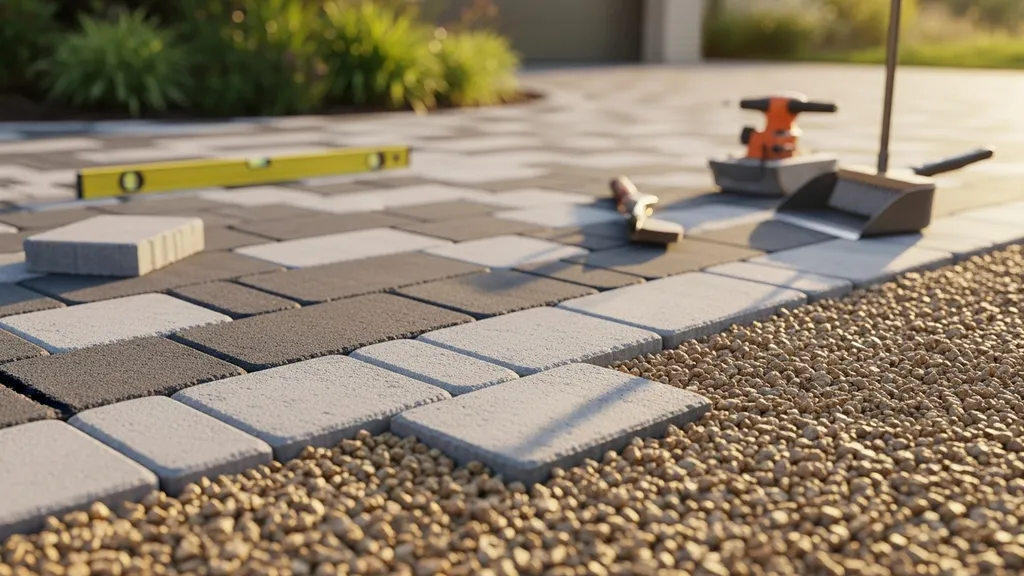
Compare permeable paving options for driveways and patios — materials, costs, installation tips, and maintenance to control stormwater and save money.
Permeable Paving: Driveway and Patio Options
Permeable paving offers a practical way to reduce runoff, recharge groundwater, and avoid costly storm drains while still providing a durable surface for driveways and patios. This guide on permeable paving explains the main material choices, how each controls stormwater infiltration, installation basics for DIYers, lifecycle costs, and the maintenance habits that keep a system working for decades. Readers will learn when to choose permeable pavers, porous concrete, porous asphalt, gravel or resin-bound surfaces, and reinforced turf grids for different load needs and budgets.
TL;DR:
- Permeable pavements can reduce runoff by 40–100% depending on design; choose a system with permeability ≥ 0.3 in/hr for light residential loads.
- Gravel, resin-bound surfacing, permeable interlocking concrete pavers (PICP), porous concrete, and porous asphalt each suit different budgets and load capacities — expect $2–$25/ft² installed.
- For DIY driveways plan for a 6–24 in crushed-rock subbase, test infiltration on-site, and schedule annual vacuuming or joint topping to maintain stormwater infiltration.
Related guides: Off grid refrigeration propane vs solar options and DIY Moisture Absorbers vs. Store-Bought Options: A Side-by-Side Comparison (2026).
Why Choose Permeable Paving For Driveways And Patios?
A common homeowner scenario: a small lot with a low spot where water pools after storms, or a municipal stormwater fee that rises with impermeable area. Permeable paving helps address both problems. At its core, permeable paving allows stormwater to pass through the surface and infiltrate into a designed aggregate reservoir, reducing runoff peaks and volumes, improving water quality, and recharging groundwater.
How permeable paving controls stormwater
Permeable systems control stormwater by providing a pathway for water to reach the subgrade rather than flow across the surface. The U.S. Environmental Protection Agency describes permeable pavements as a best management practice that reduces runoff and pollutant loading by allowing infiltration and filtering through aggregate layers (see the EPA's technical bulletin on permeable pavements: Stormwater best management practice, permeable pavements). Typical permeability targets vary: pedestrian areas often perform with 0.5–2 in/hr, while driveway systems are designed for 0.1–1 in/hr depending on soil and base.
Environmental and local benefits (runoff, heat island, groundwater recharge)
- Runoff reduction: Properly designed permeable pavement can cut surface runoff by 40–100%, depending on storm intensity and storage design.
- Water quality: The aggregate reservoir removes sediments and many pollutants; overland pollutant loads decline significantly compared with standard asphalt.
- Urban heat: Lighter-colored, water-permeable surfaces tend to reflect more solar radiation and reduce local heat retention compared with dark, impermeable asphalt.
- Incentives: Municipalities often offer stormwater fee credits or rebates for green infrastructure installations; check local programs before you start.
Permeable paving is appropriate for patios and walkways with few constraints and for driveways if designed for vehicle loads. Trade-offs exist: high-load areas require deeper subbases and stronger units; decorative choices sometimes reduce permeability and demand more maintenance.
Main Permeable Paving Types: Strengths And Use-Cases
This section covers five broadly used permeable paving categories, their permeability ranges, typical life expectancy, base depth, DIY difficulty, estimated cost per square foot, and winter performance.
Permeable interlocking concrete pavers (PICP)
- Permeability: 0.2–1.0 in/hr depending on joint size and bedding.
- Life expectancy: 25–50 years with proper base.
- Base depth: 8–24 in (deeper for driveways and poor soils).
- DIY difficulty: Moderate to hard.
- Cost: $10–$25/ft² installed.
- Winter performance: Good if joints remain open; salt can accelerate surface wear.
- Best uses: Residential driveways, patios, walkways.
- Structural capacity: Can support passenger vehicles and light trucks when set on a well-compacted subbase; consult manufacturer for heavier loads.
PICP uses concrete units with wide joints filled with open-graded stone. The system is modular, making repairs straightforward. For contractor guidance, refer to NCDOT and ASTM guidance for installation details.
Porous (pervious) concrete
- Permeability: 0.5–5 in/hr (mix-dependent).
- Life expectancy: 15–30 years.
- Base depth: 6–18 in.
- DIY difficulty: Hard (requires controlled mix and careful placement).
- Cost: $8–$18/ft² installed.
- Winter performance: Good if freeze-thaw resistance is achieved; mix design is critical.
- Best uses: Driveways, small parking areas, patios.
- Structural capacity: Good for residential vehicle loads with adequate base.
Porous concrete is mixed with little or no sand, leaving voids that permit infiltration. It needs attention to mix water content and compaction. See slab prep practices in our guide to slab and concrete prep tips for related techniques. Also consult local specifications for porous concrete mixes.
Porous (pervious) asphalt
- Permeability: 0.2–2 in/hr.
- Life expectancy: 10–20 years (shorter than dense asphalt).
- Base depth: 8–24 in.
- DIY difficulty: Hard (requires hot-mix plant and compaction equipment).
- Cost: $8–$18/ft² installed.
- Winter performance: Can be susceptible to raveling under heavy freeze-thaw unless properly sealed and maintained.
- Best uses: Driveways, residential roads, low-traffic parking.
- Structural capacity: Can carry cars and light trucks when base is adequate.
Pervious asphalt uses open-graded aggregate and a modified binder. It is commonly used in municipal projects and highways; design guidelines are available in DOT technical notes for larger installations. The product "porous asphalt" appears frequently in municipal BMP manuals.
Loose aggregate (gravel, crushed stone) and resin-bound gravel
- Permeability: Gravel ~10+ in/hr; resin-bound depends on binder, typically 0.5–2 in/hr.
- Life expectancy: Gravel 10–30+ years; resin-bound 10–15 years.
- Base depth: 6–12 in for pedestrian use; 8–18 in for driveways.
- DIY difficulty: Easy (gravel) to moderate (resin-bound).
- Cost: $2–$6/ft² (gravel), $8–$20/ft² (resin-bound).
- Winter performance: Gravel drains well; resin-bound can be slippery when wet and may need de-icing care.
- Best uses: Temporary driveways, low-cost driveways, patios, paths.
Loose aggregate is the most economical option and easy to install. Resin-bound systems lock the aggregate into a continuous surface with good aesthetics and permeability when specified correctly.
Reinforced turf grids and grass pavers
- Permeability: Essentially unrestricted at the surface; subsurface infiltration depends on base.
- Life expectancy: 10–25 years.
- Base depth: 6–14 in.
- DIY difficulty: Moderate.
- Cost: $8–$15/ft² installed.
- Winter performance: Grass growth limits winter traction; grids can handle occasional plowing.
- Best uses: Occasional vehicle areas, overflow parking, driveways with strong aesthetic demand.
- Structural capacity: Good for passenger vehicles when filled and compacted; heavier loads need reinforced units and stronger subbase.
Grass pavers and concrete grid pavers allow turf or gravel fill. They offer a green look while supporting cars when properly installed. Consider maintenance for mowing and leaf debris.
For a technical overview of permeable pavement methods and overdrain options, see the District Department of Energy & Environment's guide on permeable pavement systems.
For recycled aggregate use in subbases or porous concrete mixes, see our article on recycled aggregate options.
Comparison table: specs, costs, and performance
| Material | Typical cost ($/ft²) | Permeability (in/hr) | Recommended base depth (in) | DIY friendliness | Typical lifespan (years) | Best use |
|---|---|---|---|---|---|---|
| Gravel, crushed stone | $2–$6 | 5–20+ | 6–12 | Easy | 10–30+ | Patio, temporary driveway |
| Resin-bound gravel | $8–$20 | 0.5–2 | 4–10 | Moderate | 10–15 | Patio, walkway, decorative drive |
| Permeable interlocking pavers (PICP) | $10–$25 | 0.2–1.0 | 8–24 | Moderate–Hard | 25–50 | Driveway, patio, walkway |
| Porous concrete | $8–$18 | 0.5–5 | 6–18 | Hard | 15–30 | Driveway, small parking area |
| Porous asphalt | $8–$18 | 0.2–2 | 8–24 | Hard | 10–20 | Driveway, low-traffic road |
| Reinforced turf grids | $8–$15 | Surface unrestrictive | 6–14 | Moderate | 10–25 | Occasional vehicle parking, overflow |
Notes: Costs are estimates and vary by region and contractor. Permeability values are typical ranges; actual performance depends on base design and maintenance. For design standards and unit criteria consult the Whole Building Design Guide TechNote: Permeable pavement.
Design And Installation Basics For Permeable Driveways
This section outlines the practical steps a DIYer or small contractor must consider when building a permeable driveway. Planning correctly reduces risk of clogging, settlement, and frost heave.
Site assessment: soil infiltration, slope, and load needs
- Infiltration test: Dig a 6–12 in deep hole, fill with water, and measure the drop over 1 hour. Aim for at least 0.1 in/hr for minimal subbase or plan for an underdrain if lower. Research and local codes may require a formal infiltration test.
- Slope: Keep surface slope under 5% where practical; steeper slopes need erosion control or armored edges.
- Load: Expect passenger vehicles (~2,000–4,000 lb static) to require shallower base; trucks, RVs, or delivery vehicles need deeper bases (12–24 in) and stronger pavers.
Layered assembly: subgrade, subbase, edge restraints, surface
Typical assembly for a driveway (example for clay soil, residential vehicles):
- Excavate to required depth for subbase and anticipated frost depth (total 12–24 in).
- Place a geotextile fabric over subgrade to prevent fines migration where required.
- Install an open-graded crushed stone subbase (AASHTO No. 3/4 minus or similar) compacted lightly to lock aggregate without closing voids. Depth commonly 8–18 in depending on soil and load.
- Add a bedding layer or choker course of 3/8–3/4 in clean crushed rock where pavers or concrete will rest.
- Install edge restraints: cast-in-place concrete curbs, steel angles, or concrete-encased perimeter restraints to prevent lateral movement.
- Place surface units: PICP, porous concrete, or resin-bound surface. For PICP leave joints open and fill with 3/8 in open-graded stone.
Compaction: Use a plate compactor with a protective mat for pavers; avoid over-compaction that blocks voids.
Design tip: In cold climates follow frost protection principles. See guidance on frost protection basics for strategies to reduce frost heave risk.
Drainage details and overflow planning
- Include an overflow route: If infiltration is exceeded during intense storms, channel excess to a rain garden, bioswale, or a reinforced outlet. Avoid directing overflow toward building foundations; reference our basement moisture tips for foundation drainage best practices.
- Consider monitored underdrains: In low-infiltration sites, a perforated pipe located at the top of the reservoir layer can safely carry overflow to a storm drain or infiltration basin.
- Permits: Many local jurisdictions require plan approval for stormwater work. Confirm local codes and submit as needed.
For detailed installation charts and pavement selection, the NCDOT permeable interlocking guidelines offer tables for base depth and structural design: Permeable interlocking - connect ncdot.
Watch this step-by-step guide on installing a permeable gravel driveway grid system:
Design And Installation Basics For Patios And Low-Load Areas
Patios and walkways are easier to convert to permeable surfaces because they rarely carry vehicle loads. Use shallower bases and focus on aesthetics.
Simpler assemblies for pedestrian areas
- Typical assembly: 4–8 in open-graded subbase, geotextile separation if needed, bedding course if using pavers.
- For resin-bound or loose gravel, a compacted 4–6 in base often suffices.
- Permeability targets: 0.5–2 in/hr provides rapid surface drainage for most residential patios.
Aesthetic options and patterning
- Permeable pavers come in interlocking shapes and colors; laying patterns can mimic conventional paving.
- Resin-bound surfaces provide a smooth, continuous appearance with embedded aggregate and consistent permeability when specified.
- Combine permeable surfaces with planting strips or gravel bands for visual interest and additional infiltration.
Hardscape transitions and edging
- Use transition strips (e.g., concrete or timber) to separate permeable from conventional pavement.
- Ensure anti-trip edges and ADA-compliant seams where necessary.
- For slips risk, choose textured units or aggregates with good slip rating under wet conditions; reference Federal Highway Administration notes on permeable shoulders and surfacing for design insight: Use of Permeable Pavements - FHWA.
Tooling for DIY: plate compactor (for base), aggregate screed rails, masonry saw (for pavers), and a surface vacuum (for maintenance). A small mortar mixer can help with resin-bound systems.
Maintenance, Durability, And Common Problems
Permeable pavements need routine care to remain effective. Many failure modes are avoidable with a maintenance plan.
Routine maintenance checklist and frequency
- Annual inspection: Check for sediment buildup, vegetation in joints, and edge movement.
- Surface vacuuming: Mechanical surface vacuums or suction sweepers remove fines; schedule yearly or after significant sediment events.
- Joint topping: Replenish open-graded joint stone every 2–5 years depending on traffic and local soils.
- Oil and grease: Remove spills promptly using absorbent pads and wash with mild detergent; avoid sealants that clog pores.
How to clear sediment and restore permeability
- Use a high-powered surface vacuum (rental) to remove fines in PICP and porous asphalt.
- For gravel surfaces, rake and refill lost aggregates; recompact as needed.
- Avoid pressure washing porous concrete or asphalt at high pressure; water can drive fines deeper into the reservoir and accelerate clogging.
Repair techniques: replacing pavers, regrading aggregate
- PICP repairs: Lift affected pavers, remove clogged bedding material, replace stone, and reinstall pavers.
- Porous concrete/asphalt patch: Mill and replace the affected section; short-term cold patches can cause future distress.
- Subbase regrading: In cases of settlement, excavate, correct subgrade issues, re-establish base depth, and reinstall surface.
Designers warn that the most common failure is sediment infiltration into the reservoir. Prevent this with edge stabilization, perimeter planting buffers, and diverting sediment-laden flows away from the surface. For design considerations that meet local requirements for peak attenuation and volume control, consult permanent stormwater manuals such as the Tennessee manual on permeable pavement: Permeable pavement manual.
Recommended rental tools: surface vacuum (~$150/day), plate compactor (~$60/day), masonry saw rental, aggregate screed bars, and a vibrating tamper for turf grids.
Costs, Incentives, And Sustainability Calculations
Understanding both upfront price and lifecycle costs helps make a rational choice.
Upfront vs lifecycle cost comparison
- Upfront: Gravel is cheapest (~$2–$6/ft²), resin-bound and porous mixes fall in the mid-range ($8–$20/ft²), and high-quality PICP can reach $25/ft² installed.
- Lifecycle: Consider maintenance (vacuuming, joint topping), expected resurfacing, and avoided costs—such as constructing a larger storm drain or detention basin.
- Example ROI: If a municipality charges $200/year stormwater fee and a permeable driveway qualifies for a $100/year credit, a $5,000 premium could pay back in 25 years—this varies widely by local rates and available rebates.
For DIYers, labor savings reduce upfront cost but increase time investment. Use our material cost estimator to model scenarios.
Local incentives, stormwater fee credits, and permitting savings
- Many cities offer stormwater credits for certified permeable installations; contact the local stormwater authority.
- Some programs provide rebates for materials or design assistance. Check municipal websites before construction to capture incentives.
Estimating carbon and runoff benefits
- Embodied carbon: Gravel and turf systems have low embodied carbon; concrete and asphalt have higher embodied carbon but longer lifespans can offset impacts.
- Runoff volume reduction: Use simple volume calculations: storage volume = area × void ratio × reservoir depth. A designed reservoir with 6 in depth and 30% voids under a 500 ft² area stores ~75 ft³ (≈560 gallons).
- For a rough runoff reduction estimate, compare impermeable runoff coefficient (0.9) with a permeable system that retains 80% of a design storm.
For ways to source reclaimed materials and lower embodied carbon and cost, consult the recycling materials checklist.
Choosing The Right Permeable Paving For Your Project: A Decision Checklist
This checklist helps match site conditions and budget to the best material and whether to DIY or hire help.
- Soil infiltration: Measured percolation ≥0.2 in/hr favors shallower bases; otherwise plan for an underdrain or deeper reservoir.
- Vehicle load: Expect deeper base (12–24 in) for RVs and delivery trucks.
- Slope: Keep slope under 5% where possible; up to 8–12% with armored edges.
- Winter climate: In freeze-thaw areas, choose frost-tolerant materials and follow frost protection guidance; see frost protection basics.
- Maintenance willingness: If unwilling to vacuum or top up joints periodically, select lower-maintenance options like resin-bound or properly sealed PICP.
- Budget per ft²: $2–$6 (gravel), $8–$18 (porous asphalt/concrete/resin), $10–$25 (PICP).
- Aesthetics: Resin-bound and PICP offer the most design options.
- Permits required: Check with local permitting authority before purchasing materials.
- DIY skill level: Gravel is DIY-friendly; porous concrete and porous asphalt generally require contractors.
When deciding to hire a professional, consult our DIY vs hiring help article to weigh labor costs and complexity. Ask contractors these key questions: What subbase compaction standard do you use? Do you provide a performance warranty? How will you prevent subbase contamination during construction?
The Bottom Line
Permeable paving reduces runoff and can save money on stormwater fees while offering multiple aesthetic and functional options. For budget-conscious DIYers, gravel or resin-bound surfaces are the fastest paths; for residential driveways expecting regular car traffic, PICP or properly designed porous concrete balance durability with infiltration. Always test soil infiltration, design an overflow, and plan routine maintenance to keep the system functioning.
Frequently Asked Questions
Is permeable paving suitable for snowy or cold climates?
Yes—permeable paving is used in cold climates but requires attention to frost heave and freeze-thaw durability. Designers increase subbase depth, use frost-stable aggregates, and provide a factor of safety for frost penetration. Salt can accelerate wear on concrete-based surfaces, so select mixes with proper air entrainment and follow local winter maintenance practices. For practical frost strategies see our linked guidance on frost protection basics.
How deep should the base be for a permeable driveway?
Base depth depends on soil and expected loads: for residential cars on well-draining soil, 8–12 in of open-graded crushed rock is common; for heavy loads or poor soils plan 12–24 in. Designers often use infiltration testing and adjust base depth to provide adequate storage and prevent settlement. Manufacturer or DOT guidelines give exact depths for specific paver systems.
Can I use permeable paving under heavy vehicles or RVs?
Yes, but the design must be reinforced: choose interlocking concrete units or thicker porous concrete on a deeper, well-compacted subbase (12–24 in). Edge restraints and proper joint materials are critical. For frequent heavy loads, consult an engineer or a contractor experienced with permeable pavements to size the base and surface properly.
How often do I need to clean a permeable surface?
Plan for an annual inspection and cleaning. Surface vacuuming or mechanical sweeping once per year is a common baseline; more frequent cleanings may be needed if the site is near trees or subject to sediment-laden runoff. Joint stone top-ups typically occur every 2–5 years depending on traffic and sediment accumulation.
Do permeable driveways reduce flooding risk enough to avoid a drainage trench?
Permeable driveways reduce runoff and can often eliminate the need for additional trench drains if the system is sized to handle expected storms and has an overflow plan. However, for very high flows, poor infiltration soils, or sites near foundations, an engineered overflow or trench may still be necessary. Perform an infiltration test and consult local stormwater guidance or a professional when in doubt.