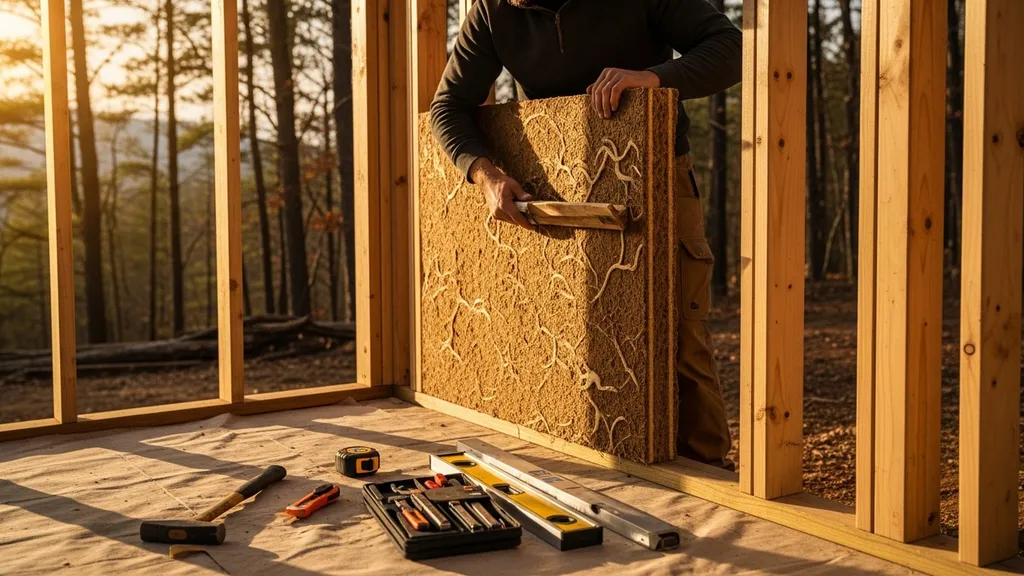
Explore whether mycelium building materials can scale for DIY eco homes — performance, costs, codes, DIY methods, and real-world limits.
Mycelium Building Materials: The Future?
Mycelium building materials are grown fungal composites made by feeding a fungus with agricultural waste to create panels, blocks, or infill that can replace engineered foams and some insulation products. For DIYers considering low-embodied-carbon options, this article explains what mycelium building materials are, how they perform (strength, R-value, fire behavior, durability), how they are made at both commercial and small-batch scales, current cost and code hurdles, and practical places to use them on a small project. Readers will leave with a realistic sense of when mycelium makes sense now—and where to wait for more data and certification.
TL;DR:
- Mycelium building materials offer low embodied carbon and comparable insulation to natural fibers (typical thermal conductivity ~0.04–0.06 W/m·K) but currently cost more per m² than mainstream insulation.
- Best current uses: interior acoustic panels, non-structural infill, and temporary formwork; avoid relying on them for primary structural loads until third‑party structural testing and code listings are available.
- Practical next steps: prototype small interior elements in dry conditions, collect lab reports and test data, and join local workshops to learn natural building methods.
Why Mycelium Building Materials Matter for DIY Eco Homes
A Quick Scenario: Tiny Off-grid Cabin Using Mycelium Panels
Imagine a 200 ft² off-grid cabin where the owner wants low-carbon materials and good acoustic control in the sleeping loft. Using mycelium panels for interior partitions and acoustic ceiling tiles reduces the use of petrochemical foams and landfill-bound mineral wool. Panels can be grown to fit framing pockets, cut with a jigsaw, and finished with a breathable lime plaster. For a prototype, this keeps work localized: no heavy machinery, minimal transport, and a clear path to evaluate moisture behavior before larger-scale use.
Interest in fungal biomaterials has grown rapidly. Research labs and startups are scaling experiments for larger building elements; for an overview of assembly strategies and large-scale prototypes see this paper on growing large-scale mycelium structures (Strategies for growing large-scale mycelium structures - pmc). Manufacturers such as Ecovative are active in the space, which helps push product testing and market attention, though DIYers should not assume commercial availability everywhere.
Key Takeaways for DIY Builders (bullet List)
- Mycelium is low-embodied-carbon compared with EPS and many foams, making it attractive for net-zero goals.
- Current performance suits non-structural uses: insulation infill, acoustic panels, and interior finishes.
- Small-batch DIY production is feasible but sensitive to contamination and moisture control.
- Code acceptance is limited; expect to use mycelium behind tested claddings or inside conditioned interiors for now.
- Costs per m² are higher at hobby scale but may fall with local supply chains and small factory setups.
- Prototype on small elements first; document test data and consult building officials if planning wider use.
For background on material choices and embodied carbon trade-offs, see our sustainable materials guide.
What Are Mycelium Building Materials? Types, Ingredients, and How They Work
What Mycelium is and How It Forms Structural Networks
Mycelium is the vegetative network of fungi—long, branching hyphae that knit together feedstock particles as they grow. When inoculated into a substrate (wood chips, hemp hurds, straw), the hyphae colonize and bind the particles into a cohesive composite. Growth can be directed inside molds to form blocks or pressed into panels. The final material is mostly fungal biomass and the leftover substrate, with properties determined by species choice, substrate mix, and post-processing.
Common Product Types: Blocks, Panels, Insulation, and Composites
- Grown blocks: molded dense bricks used experimentally as non-load-bearing masonry or formwork.
- Pressed panels: cured sheets that can be cut to size—used for interior cladding or insulation boards.
- Loose-fill or batt infill: less common, sometimes made as rigidized inserts for wall cavities.
- Laminated composites: mycelium bonded to other layers (plywood, recycled plastic) for hybrid panels.
You may see industry terms such as mycelium composites, myco-materials, and mycotecture in research and product pages.
Typical Substrates and Feedstocks Used
Common substrates include sawdust, wood chips, straw, and hemp hurds. Using local agricultural waste lowers costs and improves circularity; see our ultimate recycled materials guide for sourcing ideas. Some recipes use small percentages of binders or mineral additives to tune density, and coatings (wax, bio-resins) to improve moisture resistance.
For a detailed how-to and lab-scale recipes, the University of Washington guide is a useful technical resource: A guide for growing mycelium-based composites for architectural use.
Mycelium Building Materials Performance: Strength, Insulation, Fire Resistance, and Durability
Structural and Mechanical Performance — What Works Now
Laboratory studies report a wide range of compressive strength depending on density and substrate; low-density mycelium composites can behave similarly to rigid foams or low-strength masonry in compression. For now, most commercially available mycelium panels are rated for non-structural loads—used as cladding, partition panels, or insulation. If structural use is a goal, insist on third-party compressive and bending test reports and consider integrating mycelium as a non-load-bearing layer within a structural frame.
Thermal and Acoustic Performance Compared to Common Insulations
Mycelium insulation commonly reports thermal conductivity around 0.04–0.06 W/m·K, placing it close to natural fiber insulations like hemp or wood fiber. That typically corresponds to R-values similar to cellulose or lower-density mineral wool per inch. Acoustic absorption is often a strong point: porous mycelium boards absorb mid-to-high frequencies better than dense foams, making them attractive for interior acoustic panels. For side-by-side comparisons with standard options, see our insulation cost comparison and our piece on safer insulation options.
Fire, Moisture, Mold Risk, and Lifecycle Durability
Fire tests show mycelium composites tend to char rather than melt, which can reduce flaming droplets seen with some plastics. However, fire performance depends on substrate and whether the product has a protective coating. ASTM-standard fire testing (e.g., ASTM E84 surface burning characteristics) is necessary before specifying interior exposed use.
Moisture sensitivity is a key limit. While dried mycelium is inert, prolonged wetting or high humidity during growth can cause contamination and weaken the structure. Practical strategies: place mycelium behind vapor-control layers, keep it out of direct weather exposure, and use breathable finishes when interior humidity is managed. Lifecycle durability data from long-term field trials remains limited; expect ongoing research and pilot monitoring.
For a hands-on school project that tests strength and basic behavior, Science Buddies has an accessible project overview: Sustainable construction: building with mushroom roots.
How Mycelium Building Materials Are Made: From Lab to DIY
Commercial Production Steps — Sterilization, Inoculation, Molding, Drying
Commercial workflows typically use:
- Substrate preparation: chip/sawdust/hurd mixing and moisture adjustment.
- Sterilization or pasteurization to reduce competing organisms.
- Inoculation with spawn (mycelium culture) under controlled conditions.
- Packing into molds and incubating at controlled temperature/humidity to allow colonization.
- Drying or heat-treating to halt growth and stabilize the composite.
- Post-processing: trimming, pressing, coating, and QA testing.
Large producers use climate-controlled rooms and validated sterilization protocols to reduce contamination and ensure consistent density.
Small-batch DIY Process — Realistic Steps and Safety Cautions
A safe, non-prescriptive small-batch outline:
- Source clean substrate (sawdust or hemp hurd) and sterilize (pressure cooker or pasteurization).
- Acquire spawn from a reputable supplier for the chosen fungal species.
- Mix spawn into cooled substrate in a clean environment, fill food-grade molds, and incubate in sealed, dark boxes at recommended temperatures.
- Once fully colonized, stop growth by drying in an oven or dehydrator to a stable moisture content.
- Use only in non-structural, interior, dry applications until tested.
Common failure points: contamination by molds or bacteria, uneven density from inconsistent packing, and insufficient drying leading to rot. Always follow lab-safety guidance for handling biological cultures, wear gloves and masks, and avoid growing near food prep areas.
Watch this step-by-step guide on growing giant mycelium parts:
.Quality Control: Contamination, Consistent Density, and Testing
Quality control requires repeatable recipes, environmental control, and sample testing (density, moisture content, compressive strength). Commercial products often include batch testing and traceability. DIYers should maintain strict cleanliness, label batches, and run simple tests (weight per volume, visual checks for discoloration) before installation.
For more discussion of mycelium's role in public outreach and industry, see RESET.ORG's feature on mushroom-based construction materials: Will buildings in the future be built from mushrooms? - reset.org.
Also consider learning in a supervised setting. Our workshop opportunities page lists hands-on classes that cover sanitation and safe practice.
Costs and Scalability of Mycelium Building Materials (comparison Table)
Current Cost Drivers: Substrate, Labor, Drying/energy, Coatings
Cost components for mycelium panels include:
- Substrate sourcing: free or low-cost agricultural waste vs. purchased sawdust/hemp hurd.
- Spawn and inoculation materials: recurring cost per batch.
- Labor: manual mixing, molding, and monitoring—higher in small-batch runs.
- Energy: pasteurization/sterilization and drying steps can be energy-intensive unless waste heat or solar drying is used.
- Post-processing: coatings, pressing, and QA add costs.
At hobby scale, per‑m² costs are higher than standard insulation. Commercial scale and optimized factory lines reduce labor and energy per unit, and local substrate supply chains lower raw-material costs. See broader lifecycle analysis in studies like the Hawaii mycelium case study: Exploring mycelium as a sustainable building material (pdf).
Scaling Challenges: Industrial Facilities, Quality Control, Supply Chains
Scaling requires climate-controlled production, continuous pasteurization/sterilization systems, automated molding/pressing, and consistent, local feedstock supply. Standardized test methods and product certification are needed to convince building regulators and larger contractors to adopt mycelium widely.
Comparison Table: Mycelium vs Hempcrete, Sips, EPS (performance & Cost Factors)
| Product | Embodied carbon (direction) | Typical thermal conductivity | Typical use | Cost direction (DIY vs commercial) |
|---|---|---|---|---|
| Mycelium panels | Low | ~0.04–0.06 W/m·K | Insulation, interior panels, non-structural infill | High at DIY scale, decreasing commercially |
| Hempcrete | Low–moderate | ~0.07–0.12 W/m·K (depends on density) | Non-structural wall infill with timber frame | Moderate (material + labor) — see hempcrete comparison |
| SIPs (foam core) | Moderate–high | 0.02–0.03 W/m·K (high-performance) | Structural panels, envelope | Higher upfront, but saves labor; see SIPs guide |
| EPS (expanded polystyrene) | High | 0.031–0.038 W/m·K | Rigid insulation boards, lightweight fill | Low cost, widely available |
For strategies to reduce material costs when testing new products, see our guide on budget-friendly materials.
Mycelium Building Materials and Building Codes: Safety, Testing, and Permitting
Where Mycelium Fits in Current Codes: Non-structural vs Structural Use
Most building codes and officials treat mycelium products as experimental. To date, acceptance has been mainly for non-structural uses—interior finishes and insulation where performance is documented. Structural use typically requires engineered reports, structural testing, and product listings; these are rare for mycelium. Until standardized certifications exist, plan to use mycelium behind a tested structural frame or as interior elements.
Testing Standards to Watch (fire, Compressive, Emissions)
Key tests to look for:
- Fire: ASTM E84 (surface burning), ASTM E1354 (cone calorimeter) for reaction-to-fire data.
- Structural: ASTM D1621 (compressive strength of rigid cellular plastics), flexural testing relevant to panels.
- Emissions: VOC testing for indoor air quality.
Academic work and pilot testing are shaping the evidence base; see Dartmouth's investigations into mycelium as a low-carbon material for context: Investigations of Mycelium as a Low-carbon Building Material.
Practical Permitting Tips for Diyers and Small Builders
- Engage building officials early and present test data for the specific product or batch.
- Use mycelium in non-structural applications initially, and document installation details (separation from ground, vapor control).
- Submit third-party lab results when available and keep records of production protocols.
- Consider limited pilot projects or conditioned-space installations that minimize weather exposure.
- Use our building permit guide as an example of documentation often needed for off-grid permits, and review passive-house airtightness principles in passive-house airtightness when airtight assemblies are required.
Where to Use Mycelium Building Materials in a DIY Build
Best-fit Applications on a DIY or Small-scale Project
- Interior acoustic panels and ceiling tiles where moisture is controlled.
- Non-structural insulation infill in conditioned wall cavities (behind an air barrier).
- Temporary formwork for casting low-carbon concrete prototypes.
- Decorative interior cladding finished with breathable natural plasters.
Design and Detailing Tips to Protect Mycelium Elements
- Use an air and vapor-control strategy to keep mycelium dry; place vapor barriers on the warm side in cold climates where applicable.
- Avoid ground contact; raise panels off surfaces with a narrow plywood or treated strip.
- Protect exterior-facing mycelium from UV and rain with rain-screen cladding and a ventilated cavity—see compatible roof assemblies in our eco roofing options.
- Seal edges with breathable coatings or thin lime plaster for interior finishes.
Quick detailing tips:
- Keep panels at least 50 mm above grade when used in basements or crawlspaces.
- Use a 2–3 mm protective coating on exposed edges to reduce dusting.
- Fasten with screws into underlying studs, not through the material alone.
- Test a 1 m² mock-up before committing to a full wall or ceiling.
For guidance on pairing mycelium with interior structural panels, see our analysis of blandex vs plywood.
Limitations, Research Gaps, and the Road Ahead for Mycelium Building Materials
Key Technical Gaps: Long-term Durability, UV, and Wet-weather Performance
The main unknowns keeping mycelium niche are long-term field data on durability, UV resistance for exposed applications, and behavior after repeated wet-dry cycles. Researchers are still monitoring pilot projects and accelerated weathering tests to fill these gaps.
Commercialization Challenges and Research Directions
Scaling requires investment in continuous production lines, cost reductions in drying energy, and standardized feedstock streams. Research priorities include finding low-energy curing methods, improving moisture resistance without toxic coatings, and developing ASTM/ICC test methods tailored to bio-based composites.
What to Watch: Certification, Industrial Scaling, and New Product Categories
Look for:
- Third-party product certifications (fire and structural lab reports).
- Startups announcing factory-scale production runs and local supply partnerships.
- New hybrid products that combine mycelium with structural layers for added performance.
For broader high-performance material criteria, follow developments tied to programs like the Living building challenge.
The Bottom Line: Are Mycelium Building Materials the Future?
Mycelium building materials are a promising low-carbon niche for DIY eco homes, especially for interior, dry-location uses where their acoustic and thermal properties are valuable. They are not yet a drop-in replacement for mainstream structural systems; durability data, standardized testing, and broader code acceptance are still emerging. If you want to try them, start small, document results, and prioritize protected, non-load-bearing applications.
Actionable next steps:
- Prototype small interior elements in dry conditions and document performance.
- Collect and compare third-party test reports before expanding scope.
- Join local workshops to learn or partner with makers for your first panels.
Frequently Asked Questions
Are mycelium panels safe to use inside homes?
Mycelium panels that have been fully dried and treated are generally inert and safe for interior use when kept in dry, conditioned spaces. Fire behavior tends to be charring rather than melting, but you should verify any product's ASTM fire test results before installing it exposed in living spaces. Also check VOC emission testing if you are sensitive to indoor air quality.
For installations near moisture sources (bathrooms, exterior walls), use moisture barriers and keep mycelium out of direct contact with water until long-term wet-weather performance data are available.
What R-value can I expect from mycelium insulation?
Thermal conductivity for many mycelium composites falls around 0.04–0.06 W/m·K, roughly comparable to natural fiber insulations. Exact R-value depends on density and thickness; a 100 mm panel in that conductivity range gives approximately R-2.5 to R-3.0 per inch. For accurate design, ask for manufacturer data or test samples if you are growing panels yourself.
How much does it cost compared with traditional insulation?
At hobby or small-batch DIY scale, mycelium panels typically cost more per m² than common insulation like fiberglass or EPS due to labor, spawn, and drying energy. Commercial production is reducing costs, but current realistic expectations are a premium price unless you use free local substrate and efficient drying systems. See the comparison table above for relative cost direction and consult local producers for quotes.
Can I grow my own mycelium panels for a tiny house?
Yes, small-batch DIY production is feasible for non-structural panels. It requires clean workspace, basic sterilization or pasteurization, reliable spawn, and controlled incubation. Safety cautions: contamination is common, drying must be thorough, and you should avoid using DIY panels in load-bearing or wet-exposed locations until certified. Consider attending a supervised workshop to learn safe methods.
Will mycelium panels compost at end of life?
Most mycelium composites are biodegradable and can be composted under industrial compost conditions or returned to soil as part of a circular material flow. Coatings and additives may affect compostability—ask suppliers about what coatings were used and how they impact end-of-life disposal.