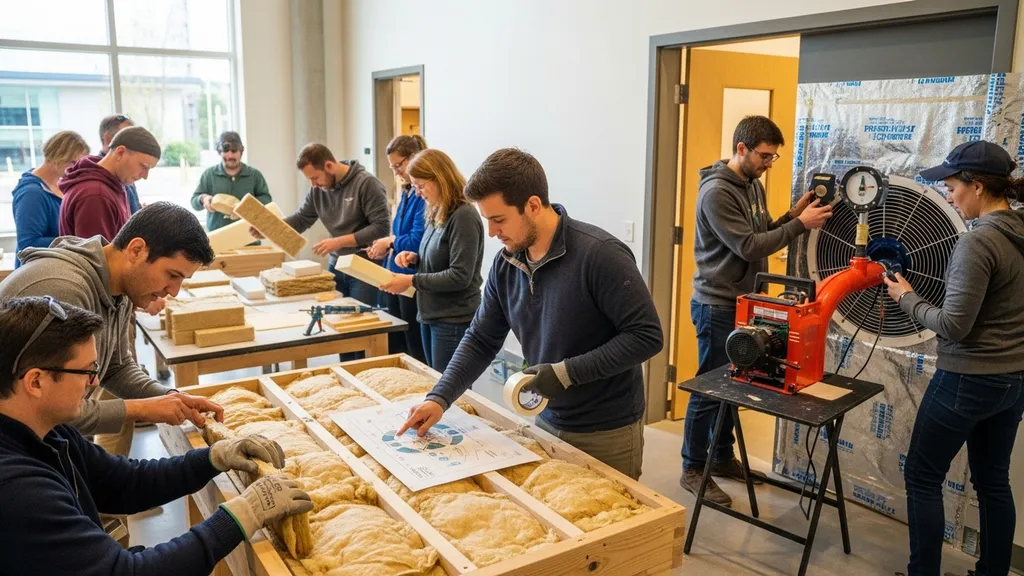
A practical guide to national, regional, and specialty green building organizations for budget-conscious DIY homebuilders.
Green Building Organizations: Groups to Join
Green building organizations are groups, associations, and certification bodies that help homeowners and builders find technical guidance, training, supplier directories, and local volunteers for sustainable construction. For budget-conscious DIY eco homebuilders, the right organizations can cut design errors, lower material costs through member discounts, and provide hands-on skills that reduce contractor time. This article shows which green building organizations matter for small self-builds, what each type offers, and how to evaluate memberships so you gain practical, cost-saving value.
TL;DR:
- Join 1–2 national groups and 1 active local chapter to access training, supplier directories, and potential volunteer labor — expect to save weeks of time and hundreds to thousands of dollars on a small build.
- Use membership training and workshops to learn core skills (air sealing, insulation, window install); within 90 days, attend a workshop, download a guide, and post a project question to a member forum.
- Pick organizations that provide hands-on workshops, local support, and clear member discounts; if cost is an issue use volunteering, one-off workshops, and free government resources first.
Why Join Green Building Organizations?
Green building organizations help DIY builders access vetted information, training, and networks that shorten learning curves. For small self-builds, that can translate into measurable savings: discounted training reduces the need to hire contractors for specialized tasks, member supplier lists often reveal lower material prices, and local chapters can recruit volunteers for community build days.
Research and best-practice guides also back the practical benefits. The U.S. Green Building Council’s California white papers summarize strategies that lower emissions and improve resilience while reducing operational costs over time; these kinds of guides are often available to members and to the public for planning decisions (see practical examples at the USGBC best-practices guides and toolkits). Government sources and labs provide additional technical data: the Department of Energy and National Renewable Energy Laboratory publish open resources for sizing systems and estimating performance, which complement organization training and help you avoid oversizing equipment.
Memberships also reduce friction with incentives and permitting. Many organizations maintain policy trackers and incentive directories that can speed up finding grants, rebates, and tax credits — see the internal green building incentives guide for the kinds of incentives organizations can help you identify. Finally, organizations often run volunteer builds, meetups, and tool-lending programs that cut labor and equipment costs for budget projects.
Types of Green Building Organizations to Consider
Navigating options is easier when you know the categories and what you should expect from each.
National Certification Bodies and Standard-setters
These organizations create performance standards and certifications such as LEED, Passive House, and the Living Building Challenge. They publish technical criteria, training, and certification pathways. For DIYers, these bodies offer structured guidance and course materials that clarify measurable targets for energy, materials, and indoor air quality.
Trade Associations and Professional Groups
Industry groups for solar installers, energy raters, or builders offer technical training, installer directories, and supplier contacts. For example, solar associations provide contractor directories and module/battery performance guidance useful for off-grid or hybrid systems that small builders install. Trade groups sometimes publish code guides and standard details that save time during inspections.
Nonprofit Advocacy and Policy Organizations
These nonprofits work on codes, incentives, and public funding. They often publish plain-language policy summaries and local advocacy results that explain how to access municipal incentives or building code exceptions. Nonprofits can be a good source of policy updates affecting your project's permitting or incentive eligibility.
Local Chapters, Community Groups, and Co-ops
Local meetups, Habitat affiliates, repair cafés, and tool co-ops deliver hands-on workshops, material swaps, and volunteer builds. They’re the groups most likely to connect you with nearby tradespeople, used-material sources, and community labor. Your municipal building department and university extension offices are good starting points to find active local chapters.
The USGBC article on encouraging sustainable practices provides useful examples of how organizations turn policy into practice, which is helpful when deciding which group aligns with your goals.
Top National Organizations Every DIY Eco Homebuilder Should Know
National organizations offer frameworks and training that many small builders use as the backbone of a project plan. Below are practical summaries and a compact comparison table.
- U.S. Green Building Council (USGBC) / LEED: Provides LEED rating systems, best-practice guides, and local chapter networks that address materials, energy, and site issues. Useful when pursuing whole-building sustainability or when you want an established certification path.
- Passive House organizations (PHI, PHIUS): Focus on airtightness and low-energy design. They offer training, certification pathways, and testing protocols (blower-door, thermal-bridge analysis) that are highly relevant to small, high-performance homes. See practical retrofit methods in our passive house retrofit tips.
- Living Building Challenge: A materials- and performance-focused program with rigorous targets. It’s resource-heavy but provides deep design criteria; read more in our article on the Living building challenge.
- Energy Star, NREL and government resources: Energy Star supplies appliance and building-level guidance; NREL and DOE publish technical datasets and calculators for renewables and efficiency estimates. The EPA’s guiding principles for sustainable federal buildings provide a clear set of sustainability practices that can inform residential projects (see the EPA guidance at the Guiding principles for sustainable federal buildings).
| Organization | Focus | Best for | Typical member benefits |
|---|---|---|---|
| USGBC / LEED | Whole-building sustainability | Builders seeking recognized certification | Training, chapter events, best-practice guides |
| Passive House (PHI, PHIUS) | Airtightness & envelope performance | High-performance, low-energy homes | Certification courses, testing protocols, local consultants |
| Living Building Challenge | Materials, resilience, equity | Innovative or demonstration projects | Rigorous guidance, case studies, material red lists |
| Energy Star / DOE / NREL | Energy and appliance efficiency | Appliance selection, system sizing | Technical data, calculators, public guides |
What you get from each depends on your goals. Passive House groups are ideal if airtight performance is a top priority. USGBC is helpful if you want a broad, market-recognized benchmark. Government labs are invaluable for free technical data and calculators.
A short note on certifications: certification requirements can be strict about documentation and testing. For a small self-build, the cost and administrative work of formal certification may outweigh the benefits. Many DIY builders adopt the standards without pursuing formal certification; the skills and checklists are still valuable. For practical window techniques taught in Passive House workshops, consult our window sealing for passive house guide.
This DIY video shows you the hands-on process:
Quick Checklist: How to Evaluate a Group Before Joining
A short checklist helps busy builders decide quickly whether a membership will pay off. Use these items to assess the group in 10–20 minutes.
- Project fit: Does the organization address your building type (tiny house, retrofit, off-grid)?
- Local presence: Is there an active local chapter or meetup within 50–100 miles?
- Training offerings: Are there hands-on workshops, not just webinars?
- Member discounts: Do members get supplier or course discounts that cover membership within a year?
- Networking potential: Are there forums or scheduled meetups to find volunteers/trades?
- Advocacy wins: Has the group influenced local incentives or building code changes?
- Fee transparency: Are membership tiers, renewal terms, and cancellation policies clear?
- Volunteer and scholarship options: Are there work-trade, student, or homeowner discounts?
- Activity level: Check recent event calendars and forum activity for signs of an active community.
The Whole Building Design Guide’s green principles overview can help you map organizational focus to building goals; see the Green principles for residential design for context. Also review material cost trajectories when assessing whether discounts justify fees: see our materials cost trends article to compare potential savings.
Regional and Local Groups: Where to Look and What to Expect
Local networks are often where DIYers find the most tangible value: workshops, tool libraries, and build days.
Searching for Local Chapters and Meetups
Start with national organizations' chapter locators, then search Meetup, Eventbrite, and Facebook groups for keywords like "green builders", "passive house", or "community build". Contact your municipal building department and local university extension office; many extension programs host workshops and maintain community partner lists. Government guidance such as the sustainability.gov guiding principles provides context for municipal programs; see the historical guidance at sustainability.gov guiding principles PDF.
What a Local Workshop or Volunteer Build Looks Like
Local workshops typically cover one skill in a half-day: blower-door testing, air-sealing details, or insulation installation. Volunteer builds can be multi-day and often involve site preparation, framing, or interior finishes under supervision. Expect a mix of experienced volunteers and novices; clear project briefs and task lists make volunteer days productive.
Working with Local Governments and Extension Services
Municipal building departments can point to energy programs, permit checklists, and local incentive links. Cooperative extension services host practical workshops and sometimes run tool- or seed-lending libraries. Use these offices to validate local codes for greywater, rainwater collection, and off-grid systems; they often have plain-language summaries that save time during permitting.
Active local groups are also a good source for used materials, tradespeople referrals, and community fundraising for small projects. They tend to offer the quickest route from learning to doing.
Trade and Specialty Groups for Systems and Materials
Trade and specialty organizations deliver targeted technical content and installer networks for systems you'll likely add to an eco home.
Passive House and Airtightness Networks
Passive house groups and airtightness networks publish testing protocols, training on blower-door operation, and lists of certified consultants and tradespeople. They focus on envelope details, window interfaces, and ventilation strategies. Pair membership training with our passive house retrofit tips for step-by-step retrofit approaches.
Solar, Batteries and Off-grid Energy Associations
Solar industry groups offer sizing tools, installer directories, and code guidance for grid-tied and off-grid systems. They can help with system design and component selection. For practical installation considerations, cross-reference association guidance with our adding solar considerations and battery sizing articles.
Natural Building, Hempcrete, and Sustainable Materials Networks
Networks focused on natural materials share supplier contacts, testing data, and build workshops (e.g., straw bale, hempcrete). They often maintain material safety data, compatibility notes, and case studies. See our sustainable materials guide for comparative data, and our hempcrete coverage for material-specific tradeoffs.
Practice Greenhealth’s guidance on green building data and materials highlights how data-driven policies support healthy building choices; this is useful when evaluating claims about material performance and embodied carbon (see green building data guidance).
Other specialty resources to consult include rainwater system groups — useful for practical systems work — see our rainwater collection guide and our off-grid water pumps article for pump selection.
How to Evaluate Membership Value: Time, Cost, and Alternatives
Making membership decisions is a simple cost-benefit question: will membership fees and time yield equal or greater returns in saved contractor hours, materials discounts, or reduced mistakes?
Membership Levels and What to Expect
Many organizations offer tiered memberships: individual, student/homeowner, and company. Higher tiers typically include deeper discounts, course credits, or listing in contractor directories. For DIYers, homeowner or individual tiers often provide enough resources: webinars, local events, and access to forums.
Estimate your time to value by listing three concrete ways membership could save you money (discounted training, material discounts, volunteer builds) and assign realistic dollar amounts or hours saved. If expected savings exceed fees plus time investment over 12 months, the membership likely makes sense.
Volunteering, Scholarships, and Free Resources
If cash is limited, search for scholarships, work-trade options, or volunteer roles within the organization. Many chapters offer reduced-fee access for volunteers who help run workshops. Government and lab resources from DOE and NREL provide free technical guides and calculators that substitute for paid training in some cases.
Alternatives: Forums, Social Groups and One-off Workshops
Forums, Facebook groups, and YouTube channels provide free advice and tutorials but vary in quality. Use them for initial learning, then validate techniques with organization-run workshops or government technical guides. For tools and foundational comfort with tasks, see our essential DIY tools list; training combined with the right tools reduces reliance on subcontractors.
Watch for red flags: inactive chapters, poorly documented events, or lack of local contacts. Those indicate low value for local, hands-on projects.
How to Make Memberships Pay Off for Your DIY Project
Turning membership into real savings means acting on the benefits quickly. Here are specific, time-bound actions to convert access into skills, discounts, and labor.
Using Training and Certification Prep for Real Skills
Attend at least one hands-on workshop within 90 days — target skills like blower-door testing, air sealing, or proper window installation. Apply workshop techniques immediately: practice installer-level window sealing on a single opening before tackling the whole house. That immediate application cements skills and reduces rework.
Finding Vetted Suppliers and Discounted Materials
Use member supplier directories to compare at least three quotes for key items: windows, insulation, and ventilation equipment. Supplier discounts can offset membership costs fast on big-ticket items. Pair directory searches with the budget-friendly materials article to identify lower-cost material alternatives without sacrificing performance.
Leveraging Networks to Find Tradespeople and Volunteers
Post a project brief to a chapter forum and request volunteers for a single build day (site prep, sheathing, or insulation). Offer work-trade or skill-swapping; many small chapters have members willing to help in exchange for experience. Use the network to vet small contractors by asking for recent member references.
First 90-day action plan after joining:
- Attend one practical workshop (air sealing or blower-door).
- Download a step-by-step guide from the organization and schedule the first DIY task.
- Post a short project query to the member forum asking for local recommendations.
Apply practical tool guidance to the skills you learn — for instance, use the air sealing tools guide to buy the right materials after a workshop, and consult the battery sizing piece when sizing a renewable system.
The Bottom Line
Green building organizations offer practical training, vetted resources, and local networks that can save money and reduce mistakes for DIY eco homebuilders. Prioritize groups that provide hands-on workshops, active local chapters, and supplier directories to get measurable value quickly.
Next steps: identify two national groups to research, join one active local meetup, and sign up for a hands-on workshop within 90 days.
Frequently Asked Questions
Are memberships worth it for first-time DIY homebuilders?
Often yes, but it depends on your goals and time horizon. Memberships that include hands-on workshops, supplier directories, or local volunteer networks tend to produce the most tangible value for first-time builders. For example, a weekend workshop on air sealing combined with a member discount on materials can cut contractor hours and reduce rework that would otherwise cost several hundred dollars.
If you plan to pursue formal certification, membership can be essential because it provides the training and documentation standards required for certification programs like Passive House or LEED.
How do I find a local chapter near me?
Start with national organizations' chapter locators, then search Meetup, Eventbrite, and Facebook for keywords like "green building", "passive house", or "sustainable builders." Contact your municipal building department and local university extension office; they often list community partners and upcoming workshops. If a chapter looks inactive, check event calendars and forum activity before joining.
Can membership help me qualify for incentives or tax credits?
Memberships themselves don't directly qualify you for incentives, but organizations often maintain updated incentive trackers and policy summaries that help members identify eligible programs. Always verify incentive requirements on official government or utility pages. For a current list of common incentives and how organizations can help you find them, see our green building incentives guide.
What if I can’t afford a paid membership?
There are low-cost and no-cost alternatives. Look for scholarships, work-trade opportunities, or volunteer roles which often grant reduced-fee access. Attend one-off workshops or use government resources from DOE and NREL for technical guidance. Free online forums and vetted YouTube channels can provide entry-level knowledge, but validate practical techniques with a paid workshop or an authoritative government guide before applying them on critical systems.
How do certification bodies differ for small self-builds?
Certification bodies vary by focus and documentation requirements. Passive House programs emphasize measurable performance (airtightness, space-conditioning loads) and require testing and modeling. LEED addresses broader sustainability categories and can be more administrative. The Living Building Challenge is highly demanding on materials and performance. For small self-builds, many owners adopt the standards without formal certification to avoid the cost and paperwork; you can still use the certification criteria as a design checklist.